
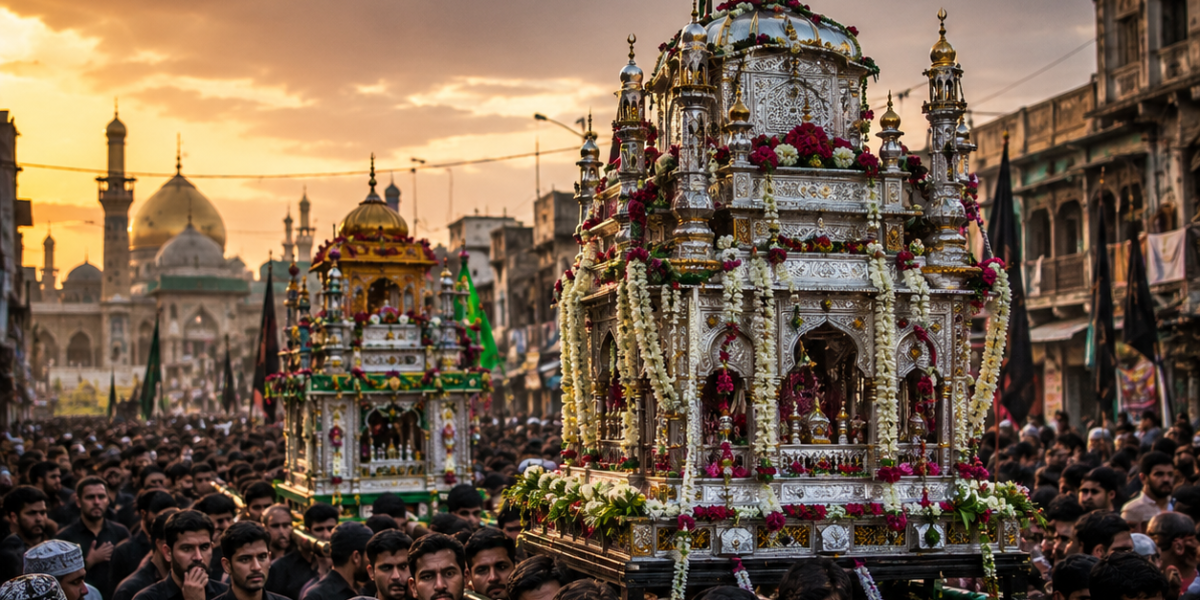
Muharram, the first month of the Islamic lunar calendar, is one of the most sacred periods in Islam. While it marks the beginning of the Islamic New Year, it is primarily remembered as a time of reflection, remembrance, and devotion. For millions of Muslims around the world, especially within the Shia community, Muharram commemorates the martyrdom of Imam Hussain, the grandson of Prophet Muhammad, at the Battle of Karbala.
Among the most visible traditions associated with Muharram is the Tazia procession, a symbolic observance that plays an important role in remembering the events of Karbala.
When Is Muharram 2026?
According to the Islamic lunar calendar, Muharram 1448 AH began in June 2026. The 10th day of Muharram, known as Ashura, is expected to be observed on June 26, 2026, subject to local moon sightings. Ashura is considered the most significant day of the month because it marks the martyrdom of Imam Hussain and his companions in Karbala.
Why Is Muharram Important?
Muharram is one of Islam’s four sacred months. It is regarded as a period of spiritual reflection, prayer, and remembrance. Unlike festive occasions, Muharram is observed with solemnity because of the tragic events that took place in Karbala in 680 CE.
The sacrifice of Imam Hussain is remembered as a stand against injustice and oppression. His refusal to submit to tyranny has made Karbala a symbol of courage, truth, and moral conviction for generations of Muslims.
What Is a Tazia?
A Tazia is a symbolic replica of the mausoleum of Imam Hussain in Karbala. The word is derived from the Arabic term associated with condolence and remembrance. Tazias are traditionally crafted from materials such as bamboo, paper, wood, and decorative elements and are displayed during Muharram observances.
In many parts of South Asia, especially India, Tazia processions have become an important part of Muharram traditions. These processions symbolize respect and mourning for Imam Hussain and the martyrs of Karbala.
Why Are Tazia Processions Taken Out?
The Tazia procession serves as a public expression of remembrance for the sacrifices made at Karbala. Participants gather to honor Imam Hussain’s legacy and reflect on the values he represented—justice, sacrifice, and steadfastness in the face of adversity.
In many regions, mourners wear black clothing as a symbol of grief and participate in religious gatherings, prayers, and commemorative events throughout the first ten days of Muharram.
The Significance of Ashura
Ashura, observed on the 10th day of Muharram, is the climax of the mourning period. It is the day on which Imam Hussain and many of his companions were martyred in Karbala. For Shia Muslims, Ashura is a day of deep mourning and remembrance, while many Sunni Muslims also observe the day through prayer and voluntary fasting.
Lessons from Karbala
The story of Karbala continues to inspire people across the world because it represents timeless values:
- Standing against injustice
- Defending truth and righteousness
- Remaining steadfast in difficult circumstances
- Sacrificing for noble principles
- Preserving faith and integrity
These lessons have made Muharram much more than a historical remembrance; it has become a symbol of moral courage and spiritual resilience.
Conclusion
Muharram 2026 is a time for reflection on one of the most significant events in Islamic history. The tradition of Tazia processions keeps alive the memory of Imam Hussain’s sacrifice and the enduring message of Karbala. Through remembrance, prayer, and community observances, millions continue to honor the values of justice, faith, and courage that define the spirit of Muharram.

Editorial Review Note
Written by Religion World — Bhavya Srivastava is the founder of Religion World and a veteran journalist with over 18 years of experience across broadcast, print, and digital media. A founding member of the International Association of Religion Journalists (IARJ), he has spent much of his career reporting on and producing content about religion, faith, and spirituality. View full profile →.
Religion World provides information on all religions and presents it impartially. You can send us information, news, updates, opinions, and suggestions at religionworldin@gmail.com. You can also follow us on X (Twitter), Facebook, and YouTube.