
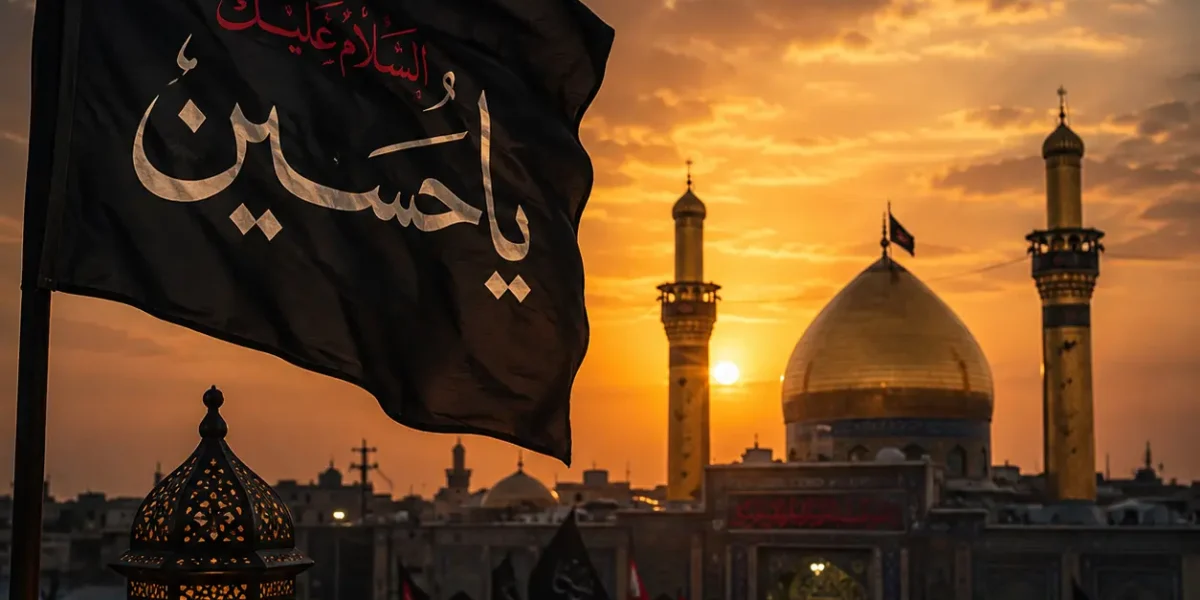
Muharram 2026 began on Tuesday, June 16, 2026, marking the start of the Islamic year 1448 AH for most of the world, with Ashura — the 10th of Muharram — falling on Thursday, June 25, 2026. In a few parts of India, including Bengaluru, local moon-sighting committees confirmed June 17 as the first day, which shifts their Ashura to June 26. Muharram is the first month of the Islamic lunar calendar and one of its four sacred months. Below, you’ll find the confirmed dates for your region, what Muharram and Ashura actually mean, the history of Karbala, how Sunni and Shia Muslims observe the month differently, and whether it’s a public holiday in India.
Quick Facts: Muharram 2026
| Detail | Information |
|---|---|
| Islamic Year | 1448 AH |
| 1st Muharram (Islamic New Year) | Tuesday, June 16, 2026 (most regions) |
| Tasu’a (9th Muharram) | Wednesday, June 24, 2026 |
| Ashura (10th Muharram) | Thursday, June 25, 2026 |
| Month ends (approx.) | July 14–15, 2026 |
| India holiday status | Gazetted holiday on Muharram (Ashura) |
| Arbaeen (40 days after Ashura) | Around August 3–4, 2026 |
Dates depend on local crescent-moon sightings and may shift by one day. Always confirm with your local mosque or national religious authority.
When Is Muharram 2026? Date in India and Worldwide
Because the Islamic calendar is lunar, every month begins with the sighting of the new crescent moon (hilal), which is why the exact date can vary by a day between countries — and sometimes within a single country.
For 2026, Saudi Arabia, the United Kingdom, Pakistan, Bangladesh, and most of India confirmed Tuesday, June 16 as 1 Muharram 1448 AH, placing Ashura on Thursday, June 25. However, some Indian regions, including Bengaluru, confirmed the crescent a day later and began Muharram on Wednesday, June 17, which moves their Ashura to Friday, June 26.
| Region | 1 Muharram 1448 AH | Ashura (10 Muharram) |
|---|---|---|
| Saudi Arabia, UAE, Qatar, Kuwait | June 16, 2026 | June 25, 2026 |
| United Kingdom | June 16, 2026 | June 25, 2026 |
| Most of India, Pakistan, Bangladesh | June 16, 2026 | June 25, 2026 |
| Bengaluru and some Indian regions | June 17, 2026 | June 26, 2026 |
This one-day variation is a normal and accepted feature of following a lunar calendar, not a contradiction. The Islamic year is roughly 10–11 days shorter than the Gregorian solar year, which is why Muharram moves backward through the seasons over a 33-year cycle.
What Does the Word “Muharram” Mean?
The word Muharram (مُحَرَّم) comes from Arabic and literally means “forbidden” or “sanctified.” It refers to the month’s special protected status: Muharram is one of the four sacred months named in the Quran, alongside Rajab, Dhul-Qa’dah, and Dhul-Hijjah. The Quran states in Surah At-Tawbah (9:36) that of the twelve months, four are sacred.
During these months, warfare and conflict were traditionally prohibited, and acts of worship and good deeds are believed to carry greater reward. This is why Muharram is widely treated as a time for reflection, repentance (tawbah), increased prayer, and spiritual renewal at the start of the new Hijri year.
The Islamic New Year and the Hijrah
The first of Muharram also marks the Islamic (Hijri) New Year. The Islamic calendar begins not with a battle or a birth, but with the Hijrah – the migration of Prophet Muhammad ﷺ and his companions from Makkah to Madinah in 622 CE. That migration established the first organized Muslim community and is remembered as a turning point built on faith, sacrifice, and perseverance.
Unlike the Gregorian New Year, the Islamic New Year is not typically marked by celebration or festivity. Instead, many Muslims use it as a quiet moment to evaluate the past year, renew sincere intentions, and set spiritual goals – much like a personal reset rooted in worship rather than fireworks.
The Historical Significance of Muharram and Karbala
Muharram is most closely associated with the Battle of Karbala, which took place in 680 CE (61 AH) in present-day Iraq. In this tragic confrontation, Imam Hussain ibn Ali, the grandson of Prophet Muhammad ﷺ, was martyred along with most of the male members of the Prophet’s family and a small group of loyal companions.
Imam Hussain refused to pledge allegiance to the ruler Yazid, whose rule he saw as unjust and corrupt. Vastly outnumbered and cut off from water in the desert of Karbala, he and his companions chose principled resistance over submission. The story is, at its heart, one of thirst, sacrifice, and standing beside the vulnerable.
His stand is remembered across the Muslim world as a defining symbol of courage, truth, and resistance against tyranny – a moral lesson that has resonated far beyond any single community or century.
What Is Ashura? The Two Meanings of the 10th Day
Ashura, the 10th day of Muharram, is one of the most significant days in the entire Islamic calendar – and it carries two historically affirmed meanings that are observed differently across traditions.
For Sunni Muslims, Ashura is primarily a day of gratitude and voluntary fasting. According to authentic hadith, when Prophet Muhammad ﷺ arrived in Madinah, he found the Jewish community fasting on this day in remembrance of how Allah saved Prophet Musa (Moses) and his followers from Pharaoh. The Prophet ﷺ affirmed this and encouraged Muslims to fast as well, often combining the 9th and 10th, or the 10th and 11th.
For Shia Muslims, Ashura is the solemn climax of mourning for Imam Hussain’s martyrdom at Karbala. It is marked with majalis (mourning gatherings), recitation of the events of Karbala, processions, and acts of charity. Both events — the salvation of Musa and the martyrdom of Hussain – are recognized as historically significant across both traditions.
Sunni vs Shia Observance of Ashura: A Quick Comparison
| Aspect | Sunni Tradition | Shia Tradition |
|---|---|---|
| Central meaning of Ashura | Gratitude for Musa’s salvation from Pharaoh | Mourning the martyrdom of Imam Hussain at Karbala |
| Primary practice | Voluntary fasting (highly recommended Sunnah) | Mourning gatherings (majalis), elegies, processions |
| Key emotional tone | Gratitude and reflection | Grief and solidarity |
| Fasting status | Strongly emphasized | Practiced by some as personal devotion, not the central act |
| Shared values | Reverence for the Prophet’s family, rejection of oppression | Reverence for the Prophet’s family, rejection of oppression |
A point worth noting for 2026: mainstream Shia religious authorities (marja’) widely discourage mourning practices that cause real physical harm. Symbolic, non-injurious commemoration — and increasingly, organized blood-donation drives on Ashura — is the form most encouraged by contemporary scholarship.
How Is Muharram Observed? Common Practices
Muslims observe Muharram in a variety of ways depending on tradition, region, and community. Common practices include:
- Offering special prayers and supplications
- Attending religious gatherings, lectures, and sermons
- Reading and reflecting on the events of Karbala
- Observing voluntary fasting, especially on the 9th and 10th
- Giving charity (sadaqah) and helping those in need
- Participating in processions and commemorative gatherings in some communities
- Hosting community meals and distributing water and food
For many believers, the month is less about a single ritual and more about a renewed inner state: patience, sincerity, and devotion carried into the new year.
The Universal Message of Karbala
The significance of Karbala reaches beyond ritual and beyond any one sect. At its core, it is a lesson about the cost — and the necessity — of standing up for justice when it is dangerous to do so. Imam Hussain’s refusal to legitimize tyranny, even at the price of his life, continues to inspire people of many faiths and backgrounds.
The values it embodies are strikingly universal:
- Courage in the face of overwhelming odds
- Unwavering commitment to truth
- Defense of justice and human dignity
- Faith and perseverance under hardship
- Sacrifice for noble principles over personal safety
This is why figures across the political and intellectual spectrum – far outside Muslim communities – have invoked Karbala as a template for moral resistance. The day endures not because it is old, but because the choice it dramatizes is timeless.
Timeline: From Tasu’a to Arbaeen
Muharram’s significance does not begin and end on Ashura. For many communities, it anchors a longer commemorative arc:
- Tasu’a — 9th Muharram (June 24, 2026): The day before Ashura, observed with preparatory fasting in Sunni practice and heightened mourning in Shia tradition.
- Ashura — 10th Muharram (June 25, 2026): The central day, marking both Musa’s salvation and Imam Hussain’s martyrdom.
- Arbaeen — 20th Safar (around August 3–4, 2026): Falling 40 days after Ashura, Arbaeen marks the end of the traditional Shia mourning period for Karbala. It is observed with one of the largest annual pilgrimages on Earth, as millions walk toward Karbala, Iraq, in remembrance of Imam Hussain.
Is Muharram a Public Holiday in India in 2026?
Yes. In India, Muharram (observed on Ashura) is a gazetted public holiday, so government offices, banks, and many schools typically remain closed. For most of the country in 2026, that holiday falls on Thursday, June 25, though regions that began the month on June 17 may observe it on Friday, June 26. Because the final date is tied to the confirmed moon sighting, employers and institutions usually confirm the exact day shortly before the occasion.
Internationally, observance varies. Several Muslim-majority countries such as Pakistan, Indonesia, Malaysia, and the UAE recognize the Islamic New Year and/or Ashura as public holidays. Notably, Saudi Arabia does not treat the Islamic New Year as a statutory paid holiday – its labour law recognizes only Eid al-Fitr, Eid al-Adha, and National Day.
Conclusion
Muharram 2026 is far more than the first page of a new Islamic calendar. It is a month that holds together gratitude and grief, history and conscience. The salvation of Prophet Musa, the martyrdom of Imam Hussain at Karbala, and the quiet renewal of the Hijri New Year all converge in these days – inviting reflection across the entire Muslim world.
Whether observed through fasting, mourning, charity, or simple contemplation, Muharram keeps alive a message that has outlasted empires: that truth is worth defending, that the vulnerable are worth standing beside, and that faith is measured most clearly under pressure.

Editorial Review Note
Written by Religion World — Bhavya Srivastava is the founder of Religion World and a veteran journalist with over 18 years of experience across broadcast, print, and digital media. A founding member of the International Association of Religion Journalists (IARJ), he has spent much of his career reporting on and producing content about religion, faith, and spirituality. View full profile →.
Religion World provides information on all religions and presents it impartially. You can send us information, news, updates, opinions, and suggestions at religionworldin@gmail.com. You can also follow us on X (Twitter), Facebook, and YouTube.