
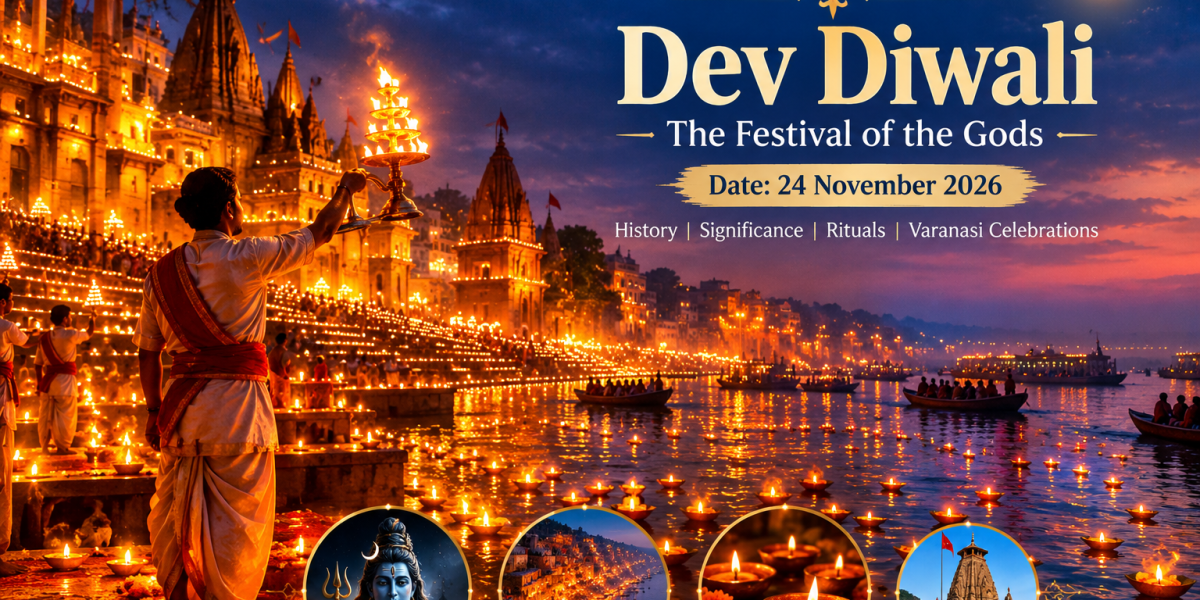
Dev Diwali, also known as Dev Deepawali, is one of the most spectacular religious festivals celebrated in Varanasi, Uttar Pradesh. Often called the “Diwali of the Gods,” the festival transforms the sacred city of Kashi into a breathtaking landscape of light, devotion and spirituality.
Celebrated on Kartik Purnima, approximately fifteen days after Diwali, Dev Diwali is associated with the victory of Lord Shiva over the demon Tripurasura. According to Hindu beliefs, the gods descend to Earth on this auspicious occasion to bathe in the holy River Ganga and bless the city.
During the festival, thousands of devotees gather along the riverfront, while millions of earthen lamps illuminate the ghats, temples and streets of Varanasi. The grand Ganga Aarti, devotional chants and reflections of countless diyas on the river create an unforgettable spiritual atmosphere.
Dev Diwali 2026: Date and Significance
Dev Diwali will be celebrated on Tuesday, November 24, 2026, on the occasion of Kartik Purnima.
The festival is particularly famous in Varanasi, where devotees gather to offer prayers, light lamps and participate in religious ceremonies along the Ganga.
According to the Hindu lunar calendar, Kartik Purnima is considered an auspicious day for bathing in sacred rivers, performing charitable activities and offering prayers. Many devotees believe that observing religious rituals on this day brings spiritual merit and divine blessings.
For the people of Varanasi, Dev Diwali is not merely a religious celebration but also an expression of the city’s ancient traditions, cultural heritage and deep connection with the River Ganga.
The History Behind Dev Diwali
The origins of Dev Diwali are associated with an important story from Hindu mythology involving Lord Shiva and the demon Tripurasura.
According to the traditional narrative, Tripurasura acquired immense power and began troubling the gods. Unable to overcome him, the gods sought Lord Shiva’s help.
Lord Shiva ultimately defeated Tripurasura and restored peace. This victory is remembered as Tripurari Purnima or Tripurotsav, and the occasion is celebrated as Dev Diwali.
The festival symbolises the triumph of righteousness over evil, the restoration of cosmic balance and the victory of divine power over arrogance.
Varanasi holds a special place in this celebration because of its association with Lord Shiva, who is worshipped as Kashi Vishwanath, the presiding deity of the sacred city.
According to religious belief, the gods celebrate Lord Shiva’s victory by illuminating the ghats of Kashi with divine light.
Why Is Dev Diwali Celebrated in Varanasi?
Varanasi, also known as Kashi and Banaras, is among Hinduism’s most sacred cities. Located on the banks of the River Ganga, it is closely associated with Lord Shiva, spiritual learning, pilgrimage and ancient religious traditions.
Dev Diwali gives the city a distinctive appearance. The steps leading down to the river are decorated with rows of earthen lamps, while temples, homes and public spaces are illuminated.
The celebration is especially grand along the famous ghats, including Dashashwamedh Ghat, Assi Ghat and other stretches of the riverfront.
The sight of thousands of lamps reflected in the Ganga, combined with the sound of conch shells, bells, devotional songs and Vedic chants, creates an atmosphere of devotion and celebration.
For devotees, lighting diyas is a symbolic expression of faith and an invitation to divine blessings. For visitors, the festival offers an opportunity to witness the living cultural and spiritual heritage of Varanasi.
Religious Significance of Dev Diwali
Dev Diwali carries several layers of religious and cultural significance.
1. Victory of Good Over Evil
The festival commemorates Lord Shiva’s victory over Tripurasura. It reminds devotees of the importance of righteousness, humility and the restoration of balance.
2. Worship of Lord Shiva
Because Varanasi is closely associated with Lord Shiva, Dev Diwali is an especially important occasion for Shiva devotees. Many visit the Kashi Vishwanath Temple and other sacred sites to offer prayers.
3. Spiritual Significance of the Ganga
The River Ganga occupies a central place in the celebrations. Devotees traditionally take a holy dip in the river and offer prayers. According to Hindu belief, bathing in the Ganga on Kartik Purnima is spiritually auspicious.
4. Lighting Diyas as a Symbol of Divine Light
The lighting of earthen lamps represents devotion, hope and the triumph of light over darkness. The illuminated ghats reflect the collective faith of the people who participate in the festival.
5. Cultural Unity and Community Celebration
Dev Diwali brings together priests, residents, pilgrims, artists and visitors. Religious ceremonies, music, cultural performances and traditional decorations make the occasion a major cultural event.
Dev Diwali 2026: Rituals and Traditions
Dev Diwali is observed through several religious practices. Although customs may vary between families and regions, the following traditions are widely associated with the festival.
Holy Bath in the River Ganga
Many devotees begin Kartik Purnima by taking a ritual bath in the Ganga. The practice is associated with spiritual purification and the seeking of divine blessings.
Lighting Earthen Lamps
The lighting of diyas is the most recognisable feature of Dev Diwali. Lamps are arranged along the ghats, temple steps, homes and courtyards.
The sight of countless lamps illuminating the riverfront is one of the festival’s defining moments.
Ganga Aarti
The grand Ganga Aarti is among the most anticipated events of Dev Diwali. Priests perform the ceremony with large lamps, incense, conch shells and devotional chants.
The ceremony honours the sacred river and expresses gratitude for its spiritual significance.
Prayers and Offerings
Devotees visit temples, offer flowers and lamps, recite prayers and participate in religious ceremonies. Some also undertake charitable activities and offer food or other assistance to people in need.
Dev Diwali Boat Rides
Boat rides on the Ganga are a popular way to experience the illuminated ghats. From the river, visitors can see the extensive rows of lamps stretching along the waterfront.
Boat services may be in high demand during the festival, so visitors should check authorised operators and make arrangements in advance.
How Is Dev Diwali Different from Diwali?
Although both festivals are associated with lights and religious celebrations, their traditional significance differs.
Diwali is celebrated on the Amavasya, or new-moon day, of the Hindu month of Kartik. It is widely associated with the return of Lord Rama to Ayodhya after his victory over Ravana, as well as the worship of Goddess Lakshmi and Lord Ganesha in many Hindu traditions.
Dev Diwali, on the other hand, falls on Kartik Purnima, the full-moon day approximately fifteen days after Diwali. Its traditional significance is associated with Lord Shiva’s victory over Tripurasura and the belief that the gods celebrate the occasion in Varanasi.
While Diwali is celebrated across India and in many parts of the world, Dev Diwali is particularly famous for the grand illumination of Varanasi’s ghats.
Why Do Thousands of Visitors Travel to Varanasi for Dev Diwali?
Dev Diwali attracts pilgrims, domestic tourists, international visitors, photographers and cultural enthusiasts.
The festival offers a rare opportunity to experience the religious traditions of Varanasi on a remarkable scale. The illuminated ghats, Ganga Aarti, temple ceremonies and devotional atmosphere make it a significant event on India’s cultural calendar.
Many visitors choose to watch the celebrations from a boat on the Ganga, while others prefer to experience the festival from the ghats themselves.
The event also supports local livelihoods through hospitality, transport, boat services, handicrafts, food businesses and other tourism-related activities.
Visitors should be prepared for large crowds and follow local safety instructions. It is advisable to check traffic restrictions, river safety guidance and official arrangements before travelling.
How to Celebrate Dev Diwali at Home
Those unable to visit Varanasi can also observe Dev Diwali at home according to their family traditions.
Common practices include:
- Cleaning and decorating the home or place of worship.
- Lighting earthen lamps in a safe location.
- Offering prayers to Lord Shiva and other deities according to personal tradition.
- Reciting devotional hymns or mantras.
- Remembering the story of Lord Shiva’s victory over Tripurasura.
- Offering food, clothes or other assistance to people in need.
These practices allow devotees to participate in the spiritual significance of the festival, even when they cannot attend the celebrations in Varanasi.
Conclusion
Dev Diwali is a remarkable celebration of faith, light and India’s spiritual heritage. Observed on Kartik Purnima, the festival commemorates Lord Shiva’s victory over Tripurasura and is especially associated with the sacred city of Varanasi.
As millions of lamps illuminate the ghats of the Ganga, Dev Diwali brings together religious devotion, cultural traditions and community celebration. The grand Ganga Aarti and the glowing riverfront make the festival an extraordinary experience for pilgrims and visitors alike.
In 2026, Dev Diwali will be celebrated on November 24. Whether observed in Varanasi or at home, the festival offers an opportunity to reflect on the victory of good over evil and the enduring spiritual significance of light.

Editorial Review Note
Written by Religion World — Bhavya Srivastava is the founder of Religion World and a veteran journalist with over 18 years of experience across broadcast, print, and digital media. A founding member of the International Association of Religion Journalists (IARJ), he has spent much of his career reporting on and producing content about religion, faith, and spirituality. View full profile →.
Religion World provides information on all religions and presents it impartially. You can send us information, news, updates, opinions, and suggestions at religionworldin@gmail.com. You can also follow us on X (Twitter), Facebook, and YouTube.