
Karwa Chauth is one of the most significant Hindu festivals observed by married women, particularly in North India. On this day, women traditionally observe a fast and pray for the long life, good health and happiness of their husbands. The fast is generally completed in the evening after sighting and worshipping the Moon.
However, cloudy skies, rain or unfavourable weather can sometimes prevent devotees from seeing the Moon. This can create confusion among women observing the vrat, especially when they have completed their day’s fasting and are waiting for the Moon to appear.
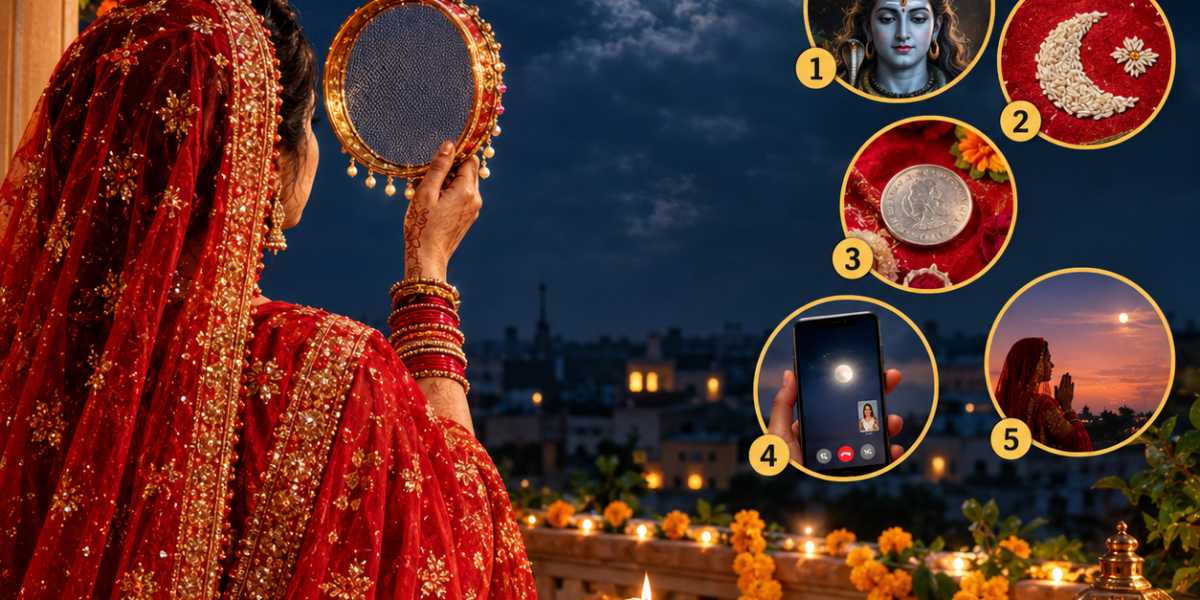
According to traditional religious practices, there are several alternatives devotees may consider when the Moon is not visible. These include worshipping the Moon on Lord Shiva’s forehead, creating a symbolic representation of the Moon with rice grains, and offering prayers in the direction of moonrise.
Karwa Chauth 2026: Date and Puja Muhurat
Karwa Chauth will be observed on Thursday, October 29, 2026. The festival falls on the Chaturthi Tithi of Krishna Paksha during the Hindu lunar month of Kartik, according to the commonly followed North Indian calendar.
The important timings for Karwa Chauth 2026 in New Delhi are:
- Karwa Chauth Date: October 29, 2026
- Chaturthi Tithi Begins: 1:06 AM on October 29
- Chaturthi Tithi Ends: 10:09 PM on October 29
- Puja Muhurat: 5:38 PM to 6:56 PM
- Expected Moonrise: Around 8:17 PM
These timings are specific to New Delhi and may vary according to location and Panchang calculations. Devotees should check the local moonrise time before performing the evening rituals.
Why Is the Moon Worshipped on Karwa Chauth?
Moon worship is a central part of the traditional Karwa Chauth observance. Married women observe the fast with prayers for their husbands’ longevity, well-being and the happiness of their married lives.
According to Hindu religious beliefs, the Moon is associated with calmness, emotional balance, love and longevity. Devotees traditionally offer arghya, or a water offering, to the Moon after its appearance.
In many households, women look at the Moon through a sieve and then look at their husbands before completing the fast. The ritual symbolises devotion, love and prayers for a prosperous married life.
Since Moon worship is an important part of the tradition, the absence of a visible Moon can leave devotees wondering how to proceed. The following practices are mentioned in traditional guidance for such situations.
5 Things to Do If the Moon Is Not Visible on Karwa Chauth
1. Worship the Moon on Lord Shiva’s Forehead
One traditional option is to worship the Moon depicted on the forehead of Lord Shiva.
According to Hindu mythology, Lord Shiva is often shown with a crescent Moon adorning his matted hair. Devotees who cannot see the actual Moon may offer prayers before an image or idol of Lord Shiva and worship the crescent Moon represented there.
They may offer water as arghya and pray for the well-being and longevity of their husbands before completing the fast according to their family traditions.
This practice is based on religious belief, and customs may differ among families and regions.
2. Create a Symbolic Moon Using Rice Grains
Another traditional practice is to create a symbolic representation of the Moon using rice grains, also known as akshat.
To follow this ritual:
- Place a red or yellow cloth on a clean platform.
- Arrange rice grains on the cloth in the shape of the Moon.
- Offer prayers to Chandra Dev.
- Chant the mantra traditionally associated with the fourth-day Moon.
One mantra mentioned in traditional guidance is:
Om Chaturth Chandraya Namah.
Devotees may then offer their prayers and complete the ritual according to their family customs.
3. Worship a Silver Coin as a Symbol of the Moon
Some traditional practices suggest using a silver coin or a small, round silver object as a symbolic representation of the Moon.
The devotee may place the object in the puja area, offer prayers and perform the customary worship. An arghya may also be offered as part of the ritual.
This practice is based on customary religious guidance rather than a universal rule followed by every Hindu community. Those observing Karwa Chauth may consult their family priest or follow the tradition practised in their household.
4. Take the Help of a Video Call
In the digital age, some devotees may consider viewing the Moon through a video call if it is clearly visible in another city.
For example, if a relative or acquaintance in another location can see the Moon while the local sky remains cloudy, a video call may allow the devotee to view it remotely.
The TV9 report mentions this as one possible alternative. However, acceptance of this practice may vary according to family traditions and individual religious interpretations. It should not be considered a universally prescribed ritual.
5. Face the Direction of Moonrise and Offer Prayers
If the Moon remains hidden behind clouds, another traditional option is to face the direction in which it is expected to rise.
Devotees may check the local moonrise time, face the appropriate direction and offer prayers to Chandra Dev. They may seek forgiveness for being unable to see the Moon and complete the observance according to their family customs.
The purpose of this practice is to maintain the devotional intention of the vrat even when weather conditions prevent an actual sighting.
Since the Moon’s direction and rising time depend on location, checking a reliable local Panchang can help devotees determine the appropriate time and direction for their prayers.
What If the Moon Is Hidden Behind Clouds?
Cloud cover does not necessarily mean that the Moon has not risen. The Moon may be above the horizon but invisible because of clouds, rain, haze or other weather conditions.
In such circumstances, devotees can first check the expected local moonrise time and wait for a reasonable opportunity to see the Moon.
If it remains hidden, they may follow a traditional alternative accepted in their family or seek guidance from their priest. Different communities may interpret the ritual requirements differently, so there is no single alternative that every household necessarily follows.
Can You Break the Karwa Chauth Fast Without Seeing the Moon?
Traditionally, the Karwa Chauth fast is completed after the Moon is sighted and worshipped. However, when the Moon cannot be seen because of bad weather, some religious traditions permit alternative forms of worship.
These may include worshipping the symbolic Moon, praying to Lord Shiva’s crescent Moon or offering prayers in the direction of moonrise.
The appropriate practice depends on family customs and religious interpretation. Devotees who are uncertain may consult their family priest rather than assume that one particular method is mandatory for everyone.
It is also important to remember that a prolonged fast without food or water can be physically demanding. People who feel unwell should prioritise their health. Pregnant or breastfeeding women, people with diabetes or other medical conditions, and those taking medication should consult a healthcare professional before observing a strict fast.
Conclusion
Karwa Chauth is a festival of devotion, love and prayers for the well-being of one’s spouse. Although sighting the Moon is traditionally an important part of the vrat, unfavourable weather can sometimes make the ritual difficult.
In such situations, devotees may consider traditional alternatives such as worshipping the Moon on Lord Shiva’s forehead, creating a symbolic Moon with rice grains, using a silver coin as a representation of the Moon, viewing it through a video call or offering prayers in the direction of moonrise.
These practices reflect religious beliefs and customs that vary among families and communities. Devotees should follow the traditions they trust, consult their family priest if needed, and ensure that their health and well-being remain a priority.

Editorial Review Note
Written by Religion World — Bhavya Srivastava is the founder of Religion World and a veteran journalist with over 18 years of experience across broadcast, print, and digital media. A founding member of the International Association of Religion Journalists (IARJ), he has spent much of his career reporting on and producing content about religion, faith, and spirituality. View full profile →.
Religion World provides information on all religions and presents it impartially. You can send us information, news, updates, opinions, and suggestions at religionworldin@gmail.com. You can also follow us on X (Twitter), Facebook, and YouTube.