
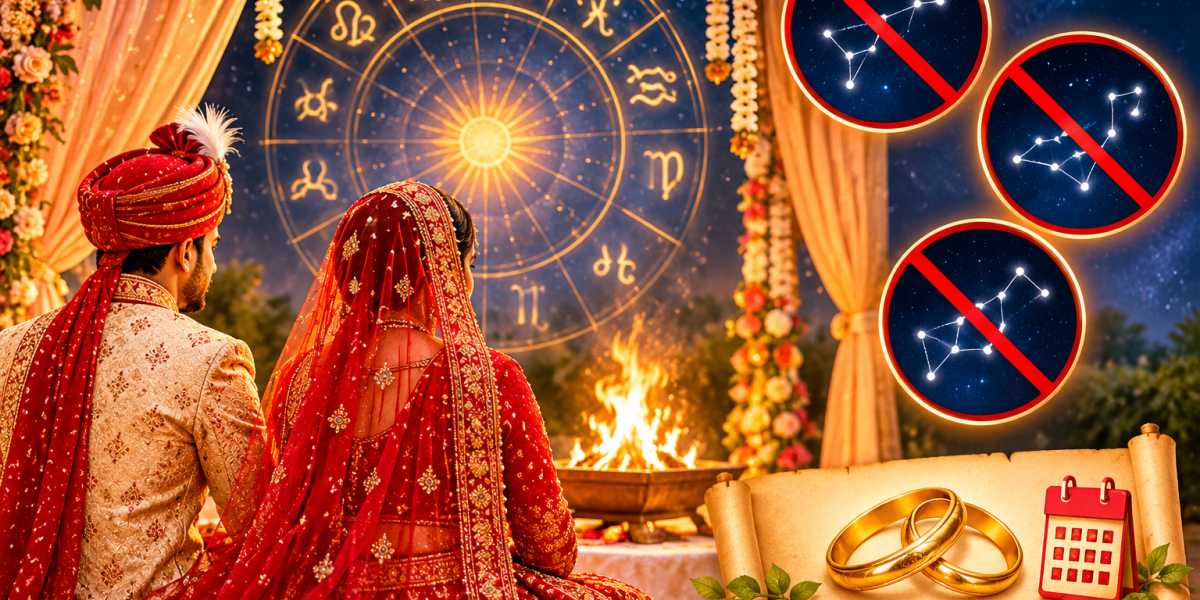
In Hindu astrology, choosing an auspicious date and time for marriage is considered an important part of wedding preparations. Along with the lunar date (Tithi) and the planetary positions, the Nakshatra, or lunar constellation, is also taken into account when deciding a wedding Muhurat.
Interestingly, some Nakshatras that are generally considered highly auspicious for religious ceremonies, buying gold or starting new ventures are traditionally avoided for marriage. According to certain Vedic astrology traditions, Pushya, Purva Phalguni and Mula are among the Nakshatras in which marriage is generally discouraged.
These beliefs are based on astrological and religious traditions. Here is a closer look at why these three Nakshatras are considered unsuitable for marriage and which Nakshatras are traditionally preferred for a wedding.
What Is the Importance of Nakshatra in Marriage?
In Vedic astrology, a Nakshatra refers to one of the 27 divisions of the zodiac along the Moon’s path. Each Nakshatra is associated with particular qualities and astrological characteristics.
When selecting a wedding Muhurat, astrologers consider several factors, including Tithi, Nakshatra, weekday, planetary positions and the couple’s horoscopes.
According to traditional beliefs, selecting a favourable Nakshatra is believed to support harmony, stability, mutual understanding and happiness in married life.
3 Nakshatras Traditionally Avoided for Marriage
1. Pushya Nakshatra
Pushya is often regarded as one of the most auspicious Nakshatras in Vedic astrology. It is traditionally associated with prosperity, growth and nourishment. Many people consider it favourable for purchasing gold, beginning new ventures and performing religious activities.
However, despite its general auspicious reputation, Pushya is traditionally avoided for marriage in several astrological traditions.
One explanation is that Pushya represents growth and expansion, while marriage is considered a distinct sacred sacrament. Certain Puranic beliefs also associate Pushya with a curse, which is cited as a reason for avoiding weddings during this Nakshatra.
Therefore, a Nakshatra considered favourable for financial or religious activities may not necessarily be suitable for every type of ceremony.
2. Purva Phalguni Nakshatra
Purva Phalguni is another Nakshatra that some astrological traditions do not recommend for marriage.
It is associated with pleasure, attraction, comfort and luxury. Although it is generally counted among auspicious Nakshatras, certain Panchang traditions advise avoiding it when selecting a wedding Muhurat.
According to these beliefs, marriage during Purva Phalguni may bring instability or emotional ups and downs in married life.
However, its suitability is interpreted differently across astrological traditions, and the complete Muhurat is generally considered before reaching a conclusion.
3. Mula Nakshatra
Mula Nakshatra is associated with the Gand Mool category and is traditionally described as having a sharp or intense nature.
Because of these astrological characteristics, it is generally considered unfavourable for marriage in several traditions.
However, Mula is not universally prohibited for weddings. Some astrological schools allow marriage under specific circumstances after examining planetary positions and the couple’s horoscopes.
For this reason, anyone considering a wedding during Mula Nakshatra is traditionally advised to consult a knowledgeable astrologer and examine the complete Panchang rather than relying on the Nakshatra alone.
Which Nakshatras Are Considered Auspicious for Marriage?
According to the astrological traditions discussed in the source, the following 11 Nakshatras are listed as favourable for marriage:
- Rohini: Associated with love, comfort and stability in married life.
- Mrigashira: Traditionally linked with mutual understanding and harmony between partners.
- Magha: Associated with family traditions and prosperity.
- Uttara Phalguni: Considered favourable for commitment and long-term stability.
- Hasta: Linked with peace, cooperation and happiness.
- Swati: Associated with balance and sweetness in relationships.
- Anuradha: Traditionally connected with love, friendship and loyalty.
- Mula: Considered suitable in certain astrological traditions and under specific conditions.
- Uttara Ashadha: Associated with stability and lasting relationships.
- Uttara Bhadrapada: Traditionally considered favourable for a peaceful and stable married life.
- Revati: Associated with affection, compassion and emotional bonding.
It is important to note that Mula appears in both the list of Nakshatras generally avoided for marriage and the list of Nakshatras considered favourable under certain conditions. This reflects differences between astrological traditions and the importance given to individual horoscope and Muhurat calculations.
Why Should Couples Check the Complete Wedding Muhurat?
A wedding Muhurat is not determined by the Nakshatra alone. Astrologers generally examine several elements of the Hindu Panchang before recommending a date and time.
These may include:
- Tithi: The lunar date on which the wedding is planned.
- Nakshatra: The Moon’s constellation at the time of the ceremony.
- Yoga and Karana: Other Panchang elements considered while selecting an auspicious time.
- Weekday: The day of the week and its traditional astrological significance.
- Planetary positions: The placement of planets and their relationship with the couple’s birth charts.
A Nakshatra that is generally avoided may be evaluated differently under specific astrological conditions. Therefore, couples are traditionally advised to consult an experienced astrologer before finalising their wedding date.
Conclusion
In Vedic astrology, the selection of a wedding Muhurat involves more than simply choosing an auspicious date. Nakshatras also play an important role in traditional calculations.
Pushya, Purva Phalguni and Mula are among the Nakshatras that certain astrological traditions advise avoiding for marriage, even though some of them are considered auspicious for other activities. At the same time, the suitability of a Nakshatra can vary depending on the astrological tradition and the complete horoscope.
Ultimately, these are traditional astrological beliefs rather than scientifically established predictions. Couples should consider their personal preferences and circumstances while making wedding plans.

Editorial Review Note
Written by Religion World — Bhavya Srivastava is the founder of Religion World and a veteran journalist with over 18 years of experience across broadcast, print, and digital media. A founding member of the International Association of Religion Journalists (IARJ), he has spent much of his career reporting on and producing content about religion, faith, and spirituality. View full profile →.
Religion World provides information on all religions and presents it impartially. You can send us information, news, updates, opinions, and suggestions at religionworldin@gmail.com. You can also follow us on X (Twitter), Facebook, and YouTube.