Idol worship, also known as image worship, has been a central part of many religious traditions for centuries, especially in Hinduism, Buddhism, and various ancient cultures. At the same time, it has also been a subject of intense debate and criticism. Some view idol worship as a powerful spiritual aid, while others consider it unnecessary or even wrong. This difference of opinion has led to long-standing controversies. But why does idol worship create such disagreement? The answer lies in theology, history, psychology, and differing understandings of spirituality.
Different Concepts of the Divine
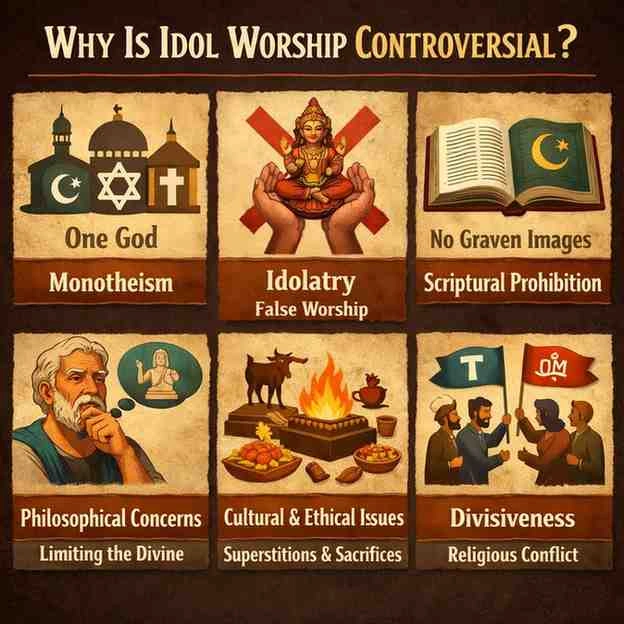
One major reason for the controversy is the difference in how religions and philosophies understand God. Some traditions believe in a formless, invisible divine presence that cannot be represented physically. For them, worshiping an image seems to limit or misrepresent the infinite nature of God. On the other hand, traditions that support idol worship see idols not as God itself, but as symbolic representations that help humans connect with the divine.
Symbolism vs Literal Interpretation
Supporters of idol worship emphasize symbolism. An idol serves as a visual focus for meditation, devotion, and emotional connection. It helps devotees concentrate their thoughts and feelings during worship. Critics, however, often interpret idol worship literally, assuming that worshippers believe the idol itself is God. This misunderstanding creates confusion and fuels disagreement between different belief systems.
Historical and Religious Conflicts
Historically, idol worship has been linked to religious reform movements. Several prophets and reformers challenged image worship, emphasizing direct connection with God without intermediaries. Over time, these theological differences became tied to identity, power, and authority, leading to conflict. In some cases, idol worship was rejected as part of broader efforts to redefine religious purity.
Fear of Superstition and Ritualism
Another reason for controversy is the fear that idol worship may encourage superstition or blind ritualism. Critics argue that people may focus more on rituals than on ethical behavior, compassion, or inner spiritual growth. When worship becomes mechanical, its deeper meaning can be lost. This concern is not entirely unfounded, as any religious practice can lose its essence if followed without understanding.
Psychological and Cultural Dimensions
From a psychological perspective, humans naturally respond to visual symbols. Idol worship fulfills this need by offering a tangible form for devotion. Culturally, idols are deeply connected to art, heritage, and community traditions. For many societies, idol worship is not just religious, but also cultural. Opposition to idol worship is sometimes perceived as a rejection of cultural identity, which intensifies the controversy.
Philosophical Differences Within Religions
Even within the same religion, views on idol worship may differ. In Hinduism, for example, some philosophical schools emphasize formless worship, while others support image worship as a valid path. These internal differences show that idol worship is not a simple issue of right or wrong, but of spiritual preference and understanding.
Misuse and Commercialization
In modern times, idol worship has also faced criticism due to commercialization. When idols become objects of profit rather than devotion, their spiritual significance diminishes. This misuse strengthens negative perceptions and gives critics more reason to question the practice.
Need for Mutual Understanding
The controversy around idol worship often arises from lack of dialogue and respect between different belief systems. When one tradition imposes its understanding on another, conflict becomes inevitable. Recognizing that spirituality can take multiple forms is essential for coexistence.
Conclusion
Idol worship becomes controversial not because it is inherently wrong or right, but because it represents different ways of understanding the divine. For some, it is a meaningful spiritual aid; for others, it contradicts their beliefs. The real issue lies not in the idol, but in intention, understanding, and respect. When worship—whether with or without images—leads to compassion, humility, and ethical living, it fulfills its true purpose. Accepting diversity in spiritual expression can transform controversy into coexistence.
~Religion World Bureau