Judaism and How Did It Begin?
Judaism is one of the oldest monotheistic religions in the world, with a history that spans more than 3,500 years. It is the religious, cultural, and ethical tradition of the Jewish people. At its core, this faith is based on the belief in one God who created the universe and established a special covenant with the people of Israel. Unlike many religions that focus mainly on belief, it places strong emphasis on law, ethics, and daily practice.
The Meaning of the Faith
The word Judaism comes from Judah, one of the twelve tribes of Israel and the name of an ancient kingdom. Followers of this tradition are called Jews, and their identity is both religious and cultural. It is not only about worship; it also guides moral behavior, social justice, family life, and personal responsibility.
This tradition teaches that life itself is sacred and that humans have a duty to improve the world. This concept is often expressed through the idea of “Tikkun Olam”, meaning “repairing the world” through righteous actions.
Its Origins
The beginning of this religion is traditionally traced back to Abraham, who is considered the first patriarch of the Jewish people. According to Jewish belief, around 1800 BCE, God made a covenant with Abraham, promising that his descendants would become a great nation if they remained faithful to God. This covenant marked the foundation of Jewish faith and identity.
Abraham’s descendants—Isaac, Jacob, and Jacob’s twelve sons—formed the early tribes of Israel. Over time, these tribes migrated to Egypt, where they eventually became enslaved. This period of suffering plays a crucial role in Jewish history.
Moses and the Birth of Jewish Law
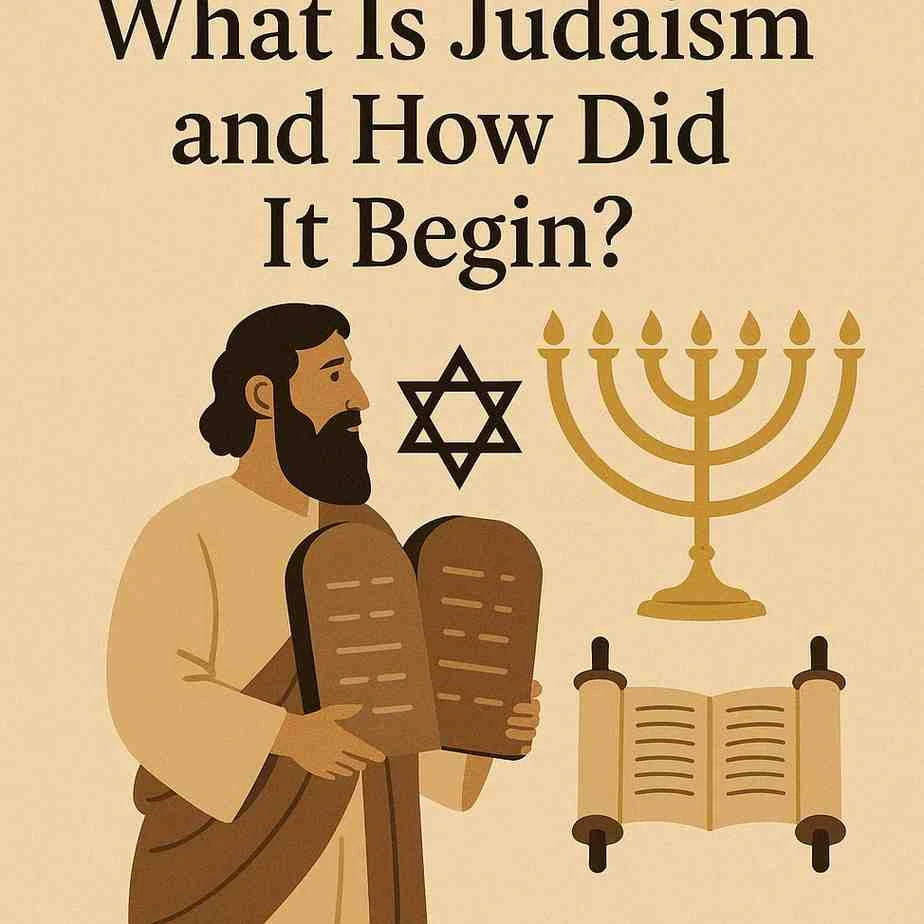
A defining moment in this tradition occurred with Moses in the 13th century BCE. According to belief, God freed the Israelites from slavery in Egypt through Moses, an event known as the Exodus. After their escape, the Israelites traveled to Mount Sinai, where Moses received the Torah, including the Ten Commandments.
The Torah is the central sacred text of this faith. It contains laws, moral teachings, and narratives that guide Jewish life. This moment transformed it from a family-based belief into a structured religious system with laws and commandments.
Core Beliefs
This religion is strictly monotheistic, believing in one, indivisible God who is eternal and just. Some key beliefs include:
God is the creator and ruler of the universe
Humans have free will and moral responsibility
Ethical living is more important than ritual alone
Justice, compassion, and mercy are divine values
Unlike some religions, it does not emphasize the afterlife heavily. Instead, it focuses on living a righteous life in this world.
Sacred Texts
The most important Jewish text is the Torah, which consists of the first five books of the Hebrew Bible. Along with the Torah, Jewish tradition also includes:
Tanakh: The complete Hebrew Bible
Talmud: A vast collection of rabbinic discussions interpreting Jewish law
These texts are studied deeply and debated, reflecting a strong intellectual tradition.
Through History
After the destruction of the Second Temple in Jerusalem in 70 CE, Jewish religious life evolved significantly. Without a central temple, community life shifted toward synagogues, study, and prayer. Rabbis became spiritual leaders, and Jewish law adapted to life in different regions.
Over centuries, several major branches developed, including Orthodox, Conservative, and Reform Judaism, each interpreting Jewish law and tradition differently while sharing common roots.
Global Influence
Though this faith has a relatively small number of followers compared to other world religions, its influence is immense. It laid the foundation for Christianity and Islam, both of which share many prophets and ethical teachings with it.
Today, it continues to thrive worldwide, balancing ancient traditions with modern life while maintaining its core values of faith, ethics, and community.
This ancient tradition is far more than an old religion—it is a living heritage that has survived thousands of years of change and challenge. Rooted in faith, law, and ethical responsibility, it began with a covenant and evolved into a rich spiritual and cultural legacy. Its enduring message is clear: faith in one God, commitment to justice, and responsibility toward humanity and the world.
Frequently Asked Questions
What is Judaism?
Judaism is one of the oldest monotheistic religions in the world. It is the religious, cultural, and ethical tradition of the Jewish people, centered on belief in one God, moral responsibility, and daily practice.
How did Judaism begin?
The beginning of Judaism is traditionally traced back to Abraham, who is regarded as the first patriarch of the Jewish people. According to Jewish belief, God made a covenant with Abraham, forming the foundation of Jewish faith and identity.
Who was Abraham in Judaism?
Abraham is considered the first patriarch of the Jewish people. He holds a central place in Jewish tradition because the covenant between God and Abraham marked the beginning of the faith’s identity and heritage.
Why is Moses important in Jewish tradition?
Moses is important because he led the Israelites out of slavery in Egypt during the Exodus. He also received the Torah at Mount Sinai, including the Ten Commandments, which shaped Jewish law and religious life.
What is the Torah?
The Torah is the central sacred text of Judaism. It contains laws, moral teachings, and narratives that guide Jewish life and forms the foundation of Jewish religious teaching.
What are the main beliefs of Judaism?
Judaism teaches belief in one eternal and just God, human free will, moral responsibility, and the importance of justice, compassion, and ethical living in everyday life.
What does Tikkun Olam mean?
Tikkun Olam means “repairing the world.” It expresses the idea that human beings have a responsibility to improve the world through righteous actions and moral behavior.
What are the sacred texts of Judaism?
The sacred texts of Judaism include the Torah, the Tanakh, and the Talmud. Together, they form the basis of Jewish scripture, law, interpretation, and tradition.
How did Judaism change after the Second Temple was destroyed?
After the destruction of the Second Temple in 70 CE, Jewish life shifted from temple-centered worship to synagogues, prayer, study, and community life. Rabbis became key spiritual leaders, and Jewish law adapted to new settings.
Why is Judaism important in world history?
Judaism has had a major influence on world history because it is one of the oldest monotheistic traditions and laid the foundation for Christianity and Islam, which share many prophets and ethical teachings with it.
~Religion World Bureau