
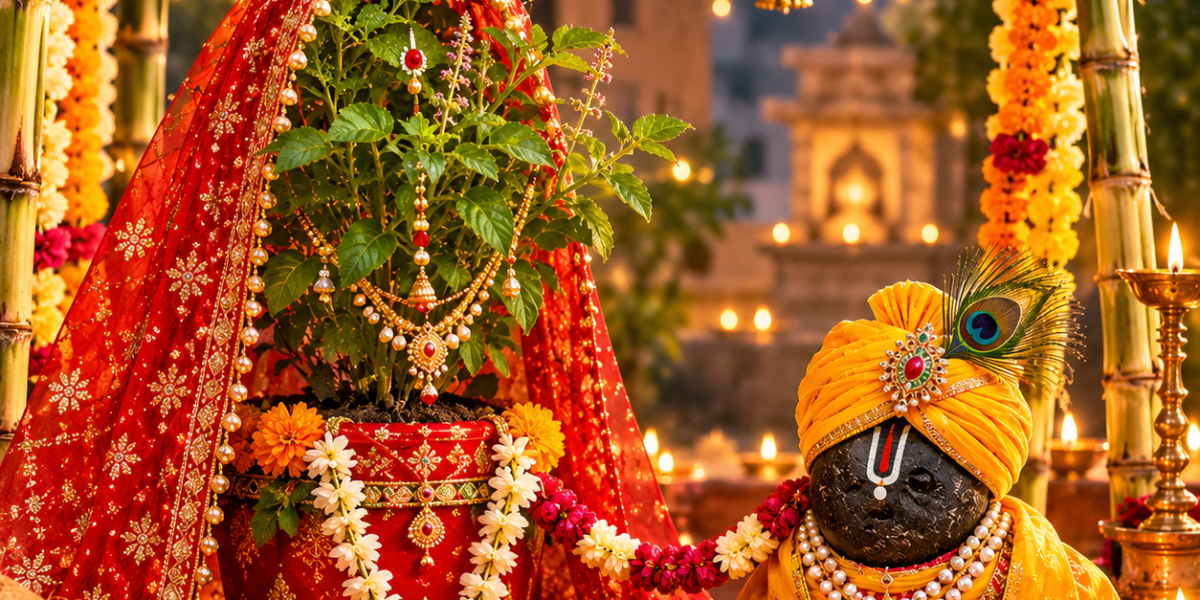
Tulsi Vivah is an important Hindu festival that celebrates the sacred marriage of Goddess Tulsi with Lord Vishnu in the form of Shaligram. On this occasion, the Tulsi plant is beautifully decorated like a bride, while Shaligram is dressed as a groom. Families perform traditional wedding rituals with devotion, including the mandap decoration, kanyadaan, saat phere and farewell ceremony.
In 2026, Tulsi Vivah will be celebrated on November 21, Saturday. The festival is observed after Dev Uthani Ekadashi and marks the beginning of the auspicious wedding season in Hindu tradition.
But why is Tulsi Mata given bridal adornment? Why is a sugarcane mandap prepared, and why are seven rounds performed around the Tulsi plant? Here are five special traditions and their religious significance.
Tulsi Vivah 2026 Date and Tithi
According to the Hindu Panchang, Tulsi Vivah is traditionally observed on the Dwadashi Tithi of Shukla Paksha in the month of Kartik.
In 2026, the festival will be celebrated on November 21, Saturday.
- Tulsi Vivah Date: November 21, 2026
- Dwadashi Tithi Begins: November 21 at 6:31 AM
- Dwadashi Tithi Ends: November 22 at 4:56 AM
Devotees celebrate the occasion by performing the symbolic wedding of Tulsi Mata and Lord Shaligram. The rituals are conducted with the same enthusiasm and devotion as a traditional Hindu wedding.
Why Is Tulsi Mata Decorated Like a Bride?
During Tulsi Vivah, the Tulsi plant is treated as a bride and decorated with traditional bridal ornaments. A red or yellow chunari is placed over the plant, while bangles, bindi, mehendi, sindoor and other items associated with married women are offered.
This tradition represents the sacred marriage of Goddess Tulsi and Lord Vishnu. Devotees celebrate the ceremony as a family wedding and often consider Tulsi Mata their daughter.
In many households, the wedding is performed with great affection and devotion, with family members participating in the rituals, singing traditional wedding songs and offering prayers for happiness and prosperity.
Tulsi Vivah 2026: Five Special Traditions and Their Significance
Several unique customs make Tulsi Vivah resemble a traditional Indian wedding. Here are five important traditions followed during the ceremony.
1. Sugarcane Mandap Is Prepared for Tulsi Mata
One of the most beautiful traditions of Tulsi Vivah is preparing a wedding mandap around the Tulsi plant using sugarcane stalks.
The mandap is decorated with flowers, diyas and rangoli to create a festive wedding atmosphere. Sugarcane is traditionally associated with sweetness, prosperity and happiness.
Just as a wedding mandap is prepared for a bride and groom, the sugarcane structure symbolises the sacred marriage ceremony of Tulsi Mata and Lord Shaligram.
2. Tulsi Mata Receives Solah Shringar
The most special part of Tulsi Vivah is decorating Tulsi Mata like a bride.
A red or yellow chunari is draped over the plant, and traditional bridal items such as bangles, bindi, mehendi and sindoor are offered.
In several places, the Tulsi plant is also decorated with beautiful clothes and ornaments. Devotees perform Solah Shringar with devotion to celebrate the divine wedding.
This ritual represents the honour and respect given to Tulsi Mata as a bride.
3. Lord Shaligram’s Baraat Is Taken Out
In Tulsi Vivah, Lord Shaligram is worshipped as a form of Lord Vishnu and represents the groom.
He is traditionally dressed in yellow clothes and decorated for the wedding ceremony. In many homes and temples, devotees organise a symbolic baraat and carry Shaligram towards the Tulsi mandap.
The procession is accompanied by bhajans, kirtans and traditional wedding songs. Family members and devotees participate in the celebration just as they would in an ordinary wedding.
4. Tulsi and Shaligram Perform Saat Phere
The wedding rituals include the symbolic union of Tulsi Mata and Lord Shaligram.
During the ceremony, the chunari covering Tulsi Mata is tied to the clothes of Lord Shaligram to perform the ritual of gathbandhan.
After this, seven symbolic rounds, or saat phere, are performed. These rounds represent the sacred bond of marriage and the commitment to remain together.
Devotees pray to Lord Vishnu and Goddess Tulsi for peace, happiness and prosperity in their families.
5. Tulsi Mata’s Vidaai and Donation of Suhaag Items
After the wedding rituals are completed, devotees perform the traditional vidaai ceremony of Tulsi Mata.
Since many families consider Tulsi Mata their daughter, the farewell is observed with affection and devotion. Items such as suhaag samagri, clothes, fruits, sweets and dakshina are offered or donated.
In several places, devotees also perform the ritual of kanyadaan. Religious belief holds that participating in Tulsi Vivah and making donations with devotion brings spiritual merit.
What Is the Religious Significance of Tulsi Vivah?
Tulsi Vivah holds special importance because it is associated with the end of Chaturmas and the beginning of the auspicious period for weddings and other ceremonies.
According to Hindu belief, Lord Vishnu awakens from his cosmic sleep on Dev Uthani Ekadashi. After this occasion, auspicious activities such as marriages, housewarming ceremonies and other religious functions are traditionally resumed.
The marriage of Tulsi Mata and Lord Shaligram symbolises devotion, purity and the divine connection between Goddess Tulsi and Lord Vishnu.
Devotees believe that celebrating Tulsi Vivah with faith brings happiness, prosperity and harmony to the household.
Conclusion
Tulsi Vivah 2026 will be celebrated on November 21. The festival is not just a symbolic wedding but an expression of devotion and the sacred place of Tulsi Mata in Hindu tradition.
From preparing a sugarcane mandap and performing Solah Shringar to organising Shaligram’s baraat, saat phere and vidaai, every ritual reflects the joy and sanctity of a traditional wedding.
The celebration also marks the beginning of the auspicious wedding season after Dev Uthani Ekadashi. Through these beautiful customs, devotees seek the blessings of Goddess Tulsi and Lord Vishnu for a peaceful, prosperous and happy family life.

Editorial Review Note
Written by Religion World — Bhavya Srivastava is the founder of Religion World and a veteran journalist with over 18 years of experience across broadcast, print, and digital media. A founding member of the International Association of Religion Journalists (IARJ), he has spent much of his career reporting on and producing content about religion, faith, and spirituality. View full profile →.
Religion World provides information on all religions and presents it impartially. You can send us information, news, updates, opinions, and suggestions at religionworldin@gmail.com. You can also follow us on X (Twitter), Facebook, and YouTube.