
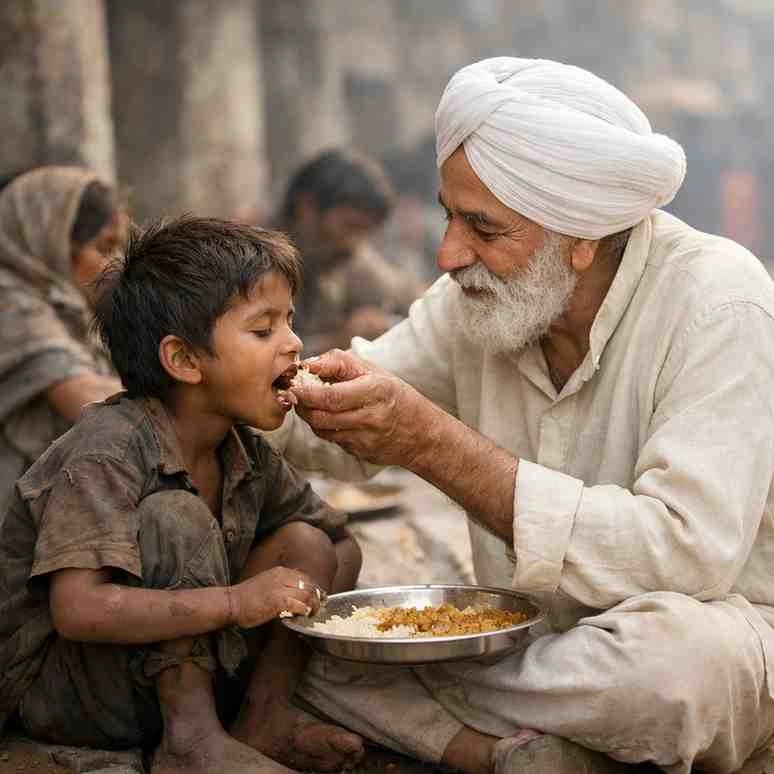
Religion has always been considered a guiding force for moral values, spiritual growth, and social harmony. While rituals, prayers, and ceremonies form a visible part of religious practice, the essence of religion lies in action, compassion, and ethical living. In this context, the question arises: Is service the greatest form of religion? Across centuries, saints, philosophers, and religious texts have emphasized that selfless service to humanity, known as seva in Indian tradition, is the highest expression of religious life.
The Concept of Service in Religion
Service, in a religious context, goes beyond charity or philanthropy. It involves selfless action for the welfare of others without expectation of reward. Whether it is helping the poor, educating the underprivileged, healing the sick, or simply offering emotional support, service embodies the moral and spiritual teachings of all major religions. Hinduism, Buddhism, Sikhism, Christianity, and Islam all highlight the importance of serving humanity as a path to spiritual growth and inner fulfillment.
Service as a Path to Spiritual Growth
Religious texts frequently equate service with devotion and moral duty. In Hinduism, the Bhagavad Gita teaches that performing one’s duty without attachment to the results purifies the soul. Sikhism emphasizes seva as a means to connect with the divine, reflecting that serving others is serving God. Christianity and Islam also teach compassion, charity, and caring for the less fortunate as central tenets of faith. These teachings collectively point to the idea that service is not just good conduct—it is spiritual practice.
Historical Examples of Service
Throughout history, saints and spiritual leaders have exemplified the principle that service is the highest form of religion. Saints like Guru Nanak, Swami Vivekananda, Mother Teresa, and Mahatma Gandhi demonstrated through their lives that serving humanity is more significant than ritualistic practice alone. They worked tirelessly for social upliftment, education, and humanitarian causes, showing that service combines both moral responsibility and spiritual devotion.
Service and Social Harmony
Service also plays a crucial role in building and maintaining social harmony. By helping others, individuals foster empathy, reduce inequality, and bridge societal gaps. Selfless service encourages community engagement, collective responsibility, and compassion, which are fundamental for peaceful coexistence. When service becomes a guiding principle, it creates a society where ethical values, mutual respect, and moral responsibility thrive.
Modern Relevance of Service
In the contemporary world, the idea that service is the greatest form of religion remains highly relevant. Modern challenges such as poverty, social injustice, environmental crises, and mental health issues demand action rooted in empathy and selflessness. Engaging in service-oriented initiatives, volunteering, and community support programs are ways in which individuals embody religious principles in practical terms. In a globalized and fast-paced society, service reminds us that true spirituality is expressed through action and compassion, not only through ritual or belief.
Ethical and Personal Benefits
Service benefits not just society but also the individual. People who dedicate time and effort to help others often experience a sense of purpose, inner peace, and fulfillment. Service cultivates virtues like patience, humility, empathy, and moral responsibility. In this sense, service functions as both a religious duty and a personal development tool, creating a synergy between ethical living and spiritual evolution.
Conclusion
Considering spiritual teachings, historical examples, and societal impact, it is clear that service is indeed the greatest form of religion. It transforms ethical principles into action, unites communities, uplifts the vulnerable, and cultivates spiritual growth in the individual. While rituals, prayers, and festivals hold significance, service gives religion its living, practical, and humane dimension. In the end, the true essence of religion is not only belief but also compassionate action, making service the ultimate expression of faith.
~Religion World Bureau

Editorial Review Note
Written by Religion World — Bhavya Srivastava is the founder of Religion World and a veteran journalist with over 18 years of experience across broadcast, print, and digital media. A founding member of the International Association of Religion Journalists (IARJ), he has spent much of his career reporting on and producing content about religion, faith, and spirituality. View full profile →.
Religion World provides information on all religions and presents it impartially. You can send us information, news, updates, opinions, and suggestions at religionworldin@gmail.com. You can also follow us on X (Twitter), Facebook, and YouTube.