
Is Spirituality Possible Without Religion?
The question of whether spirituality is possible without religion has become increasingly relevant in today’s world. People from different cultures and backgrounds are exploring new ways to connect with themselves and the universe, often without following any specific religious tradition. Spirituality and religion may appear closely related, but they are not the same. While religion is a structured system with rituals, beliefs, doctrines, and community practices, spirituality is an inner journey focused on personal growth, awareness, and connection with something deeper than the material world. This raises a powerful question: Can a person be truly spiritual without being religious? The answer is yes—and understanding how reveals the true depth of human consciousness.
Religion offers a path developed over centuries. It includes scriptures, traditions, moral codes, and sacred practices that guide its followers. Spirituality, on the other hand, is more personal and flexible. It allows an individual to explore life’s meaning without depending on any specific rules or institutions. A person may not believe in formal rituals, yet they may strongly feel the presence of a higher power, the importance of compassion, or the value of inner peace. This personal connection to truth, kindness, and awareness is the essence of spirituality.
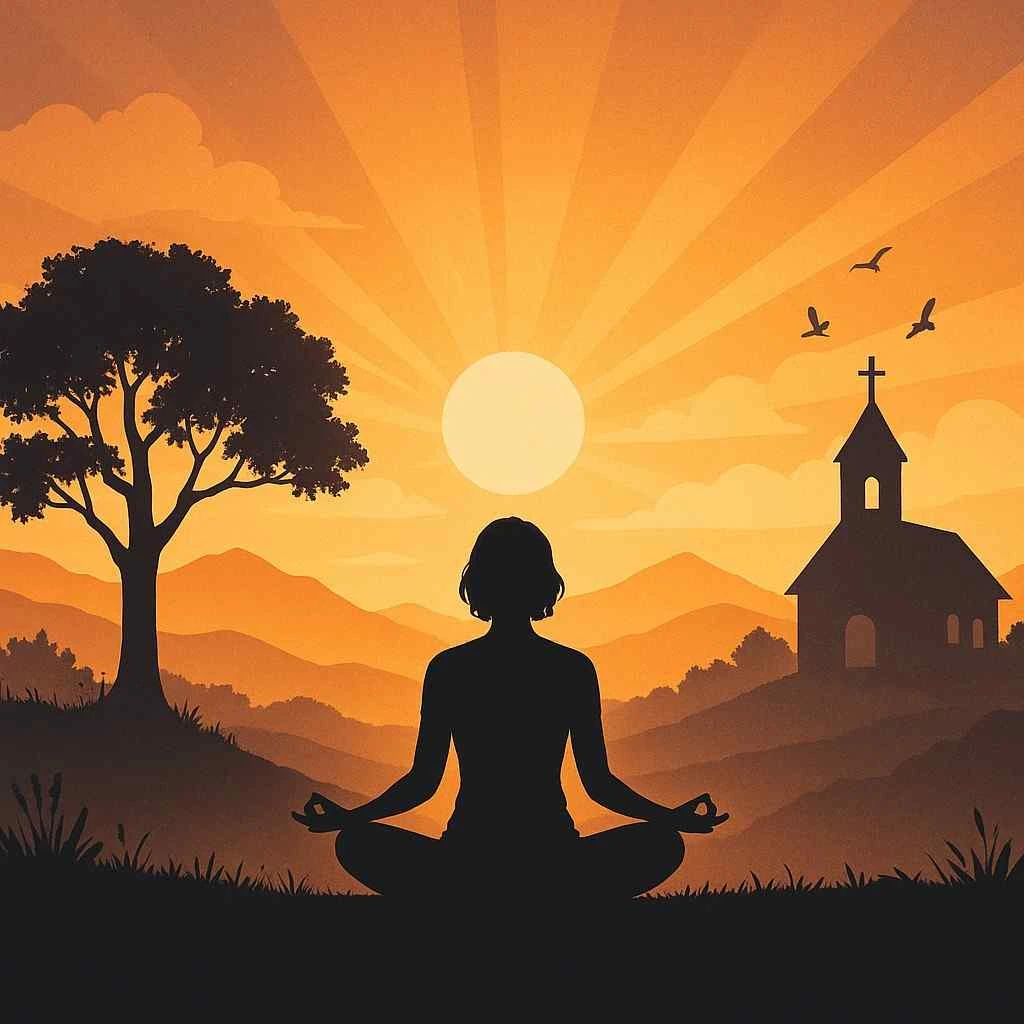
In many ways, spirituality focuses on the inner experience rather than outer expression. A religious person may go to a temple, church, or mosque, but a spiritual person may simply sit quietly under a tree and meditate. Religion provides structure, while spirituality offers freedom. Religious teachings may guide people on how to live, but spirituality teaches them to look within and understand themselves. In this way, spirituality can exist with or without religious identity.
Modern life has also changed the way people approach inner growth. With increasing stress, emotional struggles, and a fast-paced lifestyle, many individuals seek peace outside traditional religious systems. Meditation, mindfulness, yoga, breathwork, journaling, or spending time in nature have become meaningful spiritual practices. These activities do not require belonging to a specific religion, yet they deeply nurture the mind and soul. They help people become more aware, calm, and centered—qualities associated with spiritual living.
Another reason spirituality can exist without religion is that spirituality encourages exploration rather than obedience. Religion often provides answers, while spirituality encourages questions. Religion may tell a person what to believe, but spirituality invites a person to discover what feels true in their heart. This openness allows individuals to form their own understanding of the universe, consciousness, and purpose. Spiritual people often follow their intuition and inner wisdom instead of strictly defined paths.
However, this does not mean that religion and spirituality are opposed. In fact, many people find great spiritual growth within their religion. Religious scriptures, prayers, and rituals can be powerful tools for spiritual awakening. But spirituality remains independent because it is not limited to any one path. A Christian, a Hindu, a Buddhist, a Muslim, an atheist, or someone who follows no religion at all—each person can still experience spiritual connection. The soul does not require a label to grow.
Spirituality without religion also emphasizes universal values. Kindness, gratitude, compassion, forgiveness, truth, and love are principles found in every religion, yet they can also be practiced by anyone regardless of religious belief. When a person lives with awareness and strives to become better each day, they walk a spiritual path. When they try to control anger, overcome fear, heal emotional wounds, or find meaning in silence, they are nurturing the soul. None of these practices require religious identification.
At the heart of spirituality lies the desire to know oneself. When people begin to understand their thoughts, emotions, and inner patterns, they naturally move toward clarity and peace. This inner journey has no boundaries and no restrictions—only curiosity, courage, and reflection. Spirituality can thus be seen as a natural human experience, not limited to religious traditions.
In conclusion, spirituality is absolutely possible without religion. While religion offers a structured path, spirituality allows personal freedom. Both have their own beauty, and both can lead toward inner peace and self-realization. What truly matters is not whether a person follows a particular religion, but whether they are willing to look within, grow consciously, and live with compassion. A spiritual life is not defined by external rituals but by the inner transformation of the heart and mind.
~Religion World Bureau

Editorial Review Note
Written by Religion World — Bhavya Srivastava is the founder of Religion World and a veteran journalist with over 18 years of experience across broadcast, print, and digital media. A founding member of the International Association of Religion Journalists (IARJ), he has spent much of his career reporting on and producing content about religion, faith, and spirituality. View full profile →.
Religion World provides information on all religions and presents it impartially. You can send us information, news, updates, opinions, and suggestions at religionworldin@gmail.com. You can also follow us on X (Twitter), Facebook, and YouTube.