
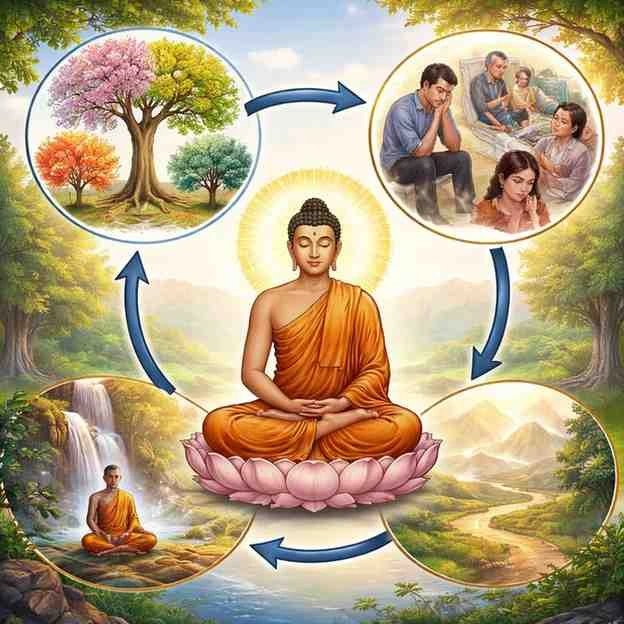
What Is Buddhist Philosophy? A Simple and Clear Explanation
Buddhist philosophy is not merely a religious belief system; it is a practical way of understanding life, suffering, and inner peace. Founded on the teachings of Gautama Buddha, this philosophy focuses on self-awareness, compassion, and liberation from suffering. One of the most unique aspects of Buddhism is its simplicity—it does not rely on blind faith but encourages personal experience and understanding. This article presents a simple and clear explanation of Buddhist philosophy for modern readers.
The Core Question of Buddhism: Why Do We Suffer?
At the heart of Buddhist philosophy lies one fundamental question: Why does human suffering exist? Buddha observed that pain, dissatisfaction, fear, and anxiety are unavoidable parts of life. However, he did not stop at identifying suffering—he also showed a path to overcome it.
This insight became the foundation of Buddhist thought and led to the formulation of the Four Noble Truths, which explain the nature of suffering and its solution.
The Four Noble Truths Explained Simply
Life Involves Suffering (Dukkha):
Suffering includes physical pain, emotional distress, dissatisfaction, and impermanence.The Cause of Suffering Is Desire (Tanha):
Craving, attachment, and ignorance lead to suffering.Suffering Can End:
By letting go of desire and attachment, freedom from suffering is possible.There Is a Path to End Suffering:
This path is known as the Noble Eightfold Path.
These truths are not pessimistic; rather, they offer hope and clarity.
The Noble Eightfold Path: A Practical Guide
The Noble Eightfold Path provides a balanced way of living and is divided into three areas:
Wisdom: Right View, Right Intention
Ethical Conduct: Right Speech, Right Action, Right Livelihood
Mental Discipline: Right Effort, Right Mindfulness, Right Concentration
Together, these principles guide individuals toward moral living, mental clarity, and spiritual wisdom.
The Concept of Impermanence (Anicca)
One of the key teachings of Buddhism is impermanence. Everything in life—emotions, relationships, success, and even suffering—is temporary. Understanding this truth helps reduce attachment and fear.
When people accept impermanence, they suffer less because they no longer cling tightly to changing conditions.
Non-Self (Anatta): Letting Go of Ego
Buddhism teaches that there is no permanent, unchanging self. This idea, known as Anatta, challenges the ego-driven identity that causes comparison, pride, and suffering.
By realizing that the “self” is constantly changing, individuals develop humility, compassion, and emotional freedom.
The Middle Path: Balance Over Extremes
Buddha rejected both extreme luxury and extreme self-denial. Instead, he taught the Middle Path, a balanced lifestyle that avoids excess and deprivation.
This teaching is especially relevant today, where people often struggle between over-indulgence and burnout.
Meditation and Mindfulness in Buddhist Philosophy
Meditation is a central practice in Buddhism. Through mindfulness and concentration, individuals observe their thoughts without attachment or judgment.
Benefits of Buddhist meditation include:
Mental calmness
Emotional balance
Increased self-awareness
Reduced stress and anxiety
Meditation is not about escaping life but understanding it clearly.
Compassion and Non-Violence
Buddhist philosophy strongly emphasizes compassion (Karuna) and loving-kindness (Metta). All beings are seen as interconnected, and harming others is believed to increase suffering for everyone.
This ethical approach encourages kindness, patience, and peaceful coexistence.
Relevance of Buddhist Philosophy in Modern Life
In today’s fast-paced world, Buddhist philosophy offers tools to handle stress, uncertainty, and emotional struggles. Its teachings promote inner peace, clarity, and purposeful living without requiring religious conversion.
Buddhism teaches how to live wisely, not merely what to believe.
Buddhist philosophy is a simple yet profound guide to understanding life. It teaches that suffering arises from desire and ignorance, but through awareness, ethical living, and meditation, freedom is possible. Its timeless wisdom continues to inspire millions across cultures, offering a path of peace, compassion, and self-realization.
~Religion World Bureau