
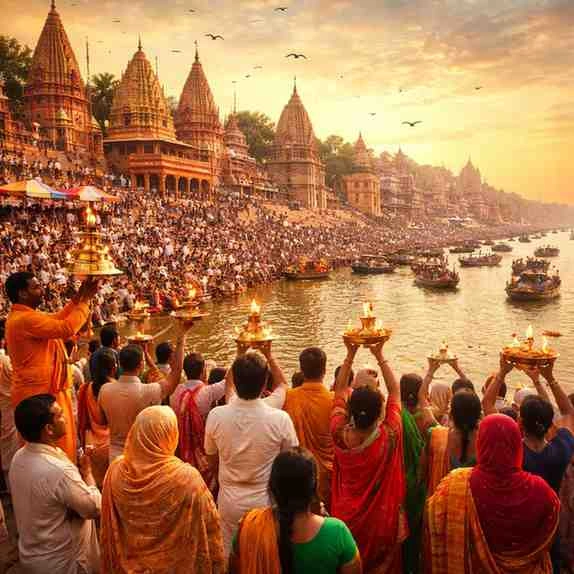
Religion has been an integral part of Indian culture for thousands of years. It is not merely a set of rituals or beliefs but a framework that shapes values, social structures, and daily life. The role of religion in Indian culture is profound, influencing everything from festivals and education to art, ethics, and community life. Understanding this relationship provides insight into why India is often described as a deeply spiritual nation.
Religion as the Foundation of Social Life
In India, religion is more than personal belief—it forms the foundation of social life. Ancient texts, such as the Vedas, Upanishads, and epics like the Ramayana and Mahabharata, offer guidance on moral conduct, social responsibilities, and interpersonal relationships. Religious teachings have historically shaped laws, customs, and family structures. This integration of faith and society helps maintain harmony, guiding individuals on how to live ethically while contributing to the welfare of the community.
Festivals and Cultural Identity
Religion plays a central role in Indian festivals, which are celebrated with devotion and enthusiasm across communities. Diwali, Eid, Guru Nanak Jayanti, Christmas, Holi, and Buddha Purnima are more than religious observances—they are cultural celebrations that strengthen social bonds. These festivals transmit values like compassion, unity, and gratitude, ensuring that spiritual principles are embedded in everyday life. Through these celebrations, religion sustains cultural identity across generations.
Religion and Art
Indian culture is rich in art, music, dance, and architecture, much of which is inspired by religious themes. Temples, mosques, gurudwaras, and churches are architectural marvels, while classical dances and music often narrate mythological stories. Religion thus becomes a source of creative expression, preserving heritage and instilling moral and spiritual messages through aesthetically engaging forms. This relationship between religion and art has allowed Indian culture to maintain its uniqueness and global influence.
Ethical and Moral Guidance
Religion provides a moral compass in Indian society. Principles such as ahimsa (non-violence), satya (truth), dharma (duty), and seva (service) originate from religious teachings. These principles guide behavior in personal, social, and professional spheres. For instance, the emphasis on honesty and compassion in religious texts continues to influence Indian ethical standards today, showing that religion shapes both thought and action.
Community and Social Cohesion
Religious institutions, whether temples, mosques, gurudwaras, or community centers, act as hubs of social interaction. They promote social cohesion by organizing charitable activities, educational programs, and community events. Through collective worship and service, religion strengthens the sense of belonging and shared purpose. This communal aspect of Indian culture fosters unity despite the country’s linguistic, ethnic, and regional diversity.
Education and Spiritual Growth
Historically, religion has also been central to education in India. Ancient gurukuls, Buddhist monasteries, and Islamic madrasas provided not only spiritual instruction but also academic and ethical training. Even today, religious principles influence curricula in many schools, and moral education often draws upon religious stories and teachings. Religion thus plays a dual role: nurturing both intellectual and spiritual growth.
Modern Relevance
In contemporary India, religion continues to shape culture even as society modernizes. Urbanization, technology, and globalization have transformed lifestyles, but religious festivals, rituals, and ethical frameworks remain influential. Religion helps maintain cultural continuity, offering a sense of identity and grounding amidst rapid social changes.
Conclusion
The role of religion in Indian culture is multifaceted. It guides ethics, preserves traditions, inspires art, strengthens community ties, and nurtures spiritual and intellectual growth. Religion is not merely a private affair in India—it is interwoven with the social fabric, providing stability, meaning, and continuity. Understanding this dynamic highlights why India is often regarded as a spiritually rich and culturally diverse nation.
~Religion World Bureau

Editorial Review Note
Written by Religion World — Bhavya Srivastava is the founder of Religion World and a veteran journalist with over 18 years of experience across broadcast, print, and digital media. A founding member of the International Association of Religion Journalists (IARJ), he has spent much of his career reporting on and producing content about religion, faith, and spirituality. View full profile →.
Religion World provides information on all religions and presents it impartially. You can send us information, news, updates, opinions, and suggestions at religionworldin@gmail.com. You can also follow us on X (Twitter), Facebook, and YouTube.