
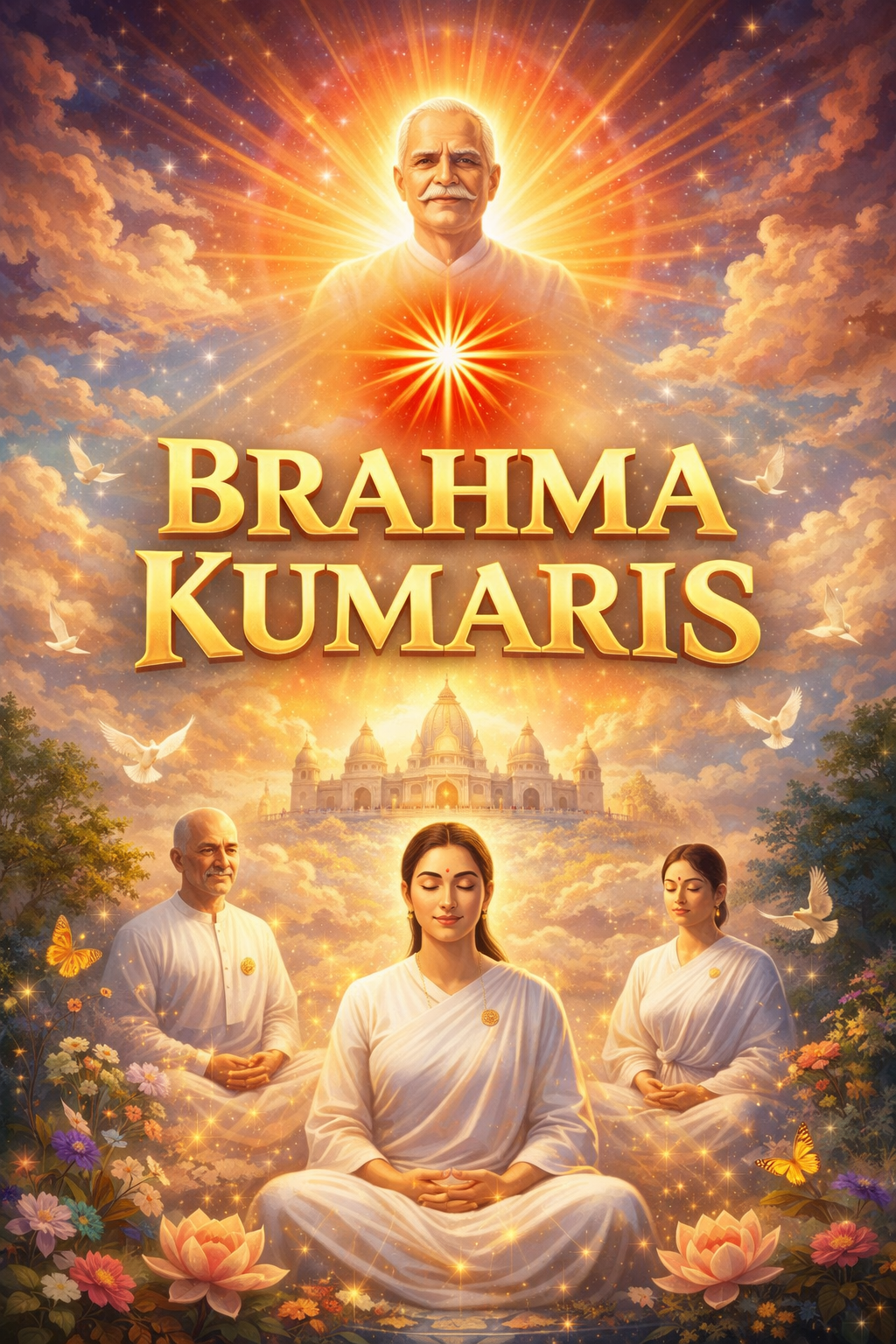
How to Join Brahma Kumaris: A Complete Guide for Beginners
By Religion World | www.religionworld.in
The Brahma Kumaris World Spiritual University (BKWSU) is a global spiritual movement focused on Rajyoga meditation, self-transformation, and values-based living. Founded in 1937 by Brahma Baba (Lekhraj Kripalani), the organization emphasizes inner peace, clarity of thought, and spiritual empowerment in daily life.
If you want to join Brahma Kumaris, the process is simple: visit a nearby Rajyoga Meditation Centre, attend an introductory session, and enroll in the free foundation course – there is no fee, no conversion, and no formal initiation. Brahma Kumaris, founded in 1937 in Hyderabad (Sindh), is a spiritual organisation open to people of every faith background, and joining is entirely voluntary at every stage. This guide walks through the actual enrollment process, what the foundation course covers, how the lifestyle changes gradually, and what terms like “Amrit Vela” and “Murli” actually mean – so you know exactly what to expect before you walk into a centre.
Key Takeaways
- Joining Brahma Kumaris is free at every stage – no membership fee, no donation requirement to begin.
- The entry point is a structured foundation course in Rajyoga meditation, typically delivered over about a week of daily sessions.
- There is no conversion, initiation ceremony, or renouncing of your existing religion required.
- Involvement is flexible – you can attend occasional sessions, volunteer, or pursue full-time dedicated life; each is self-chosen.
- Lifestyle changes (vegetarian diet, early rising, celibacy for some practitioners) are adopted gradually and only by personal choice, not imposed on beginners.
What Is Brahma Kumaris?
The Brahma Kumaris World Spiritual University (BKWSU) is a spiritual movement teaching Rajyoga meditation, soul-consciousness, and values-based living. It was founded by Lekhraj Kripalani – known to followers as Brahma Baba – a former jewellery businessman from Hyderabad, Sindh (in present-day Pakistan). After a series of visions in the mid-1930s, he transferred his personal wealth to a managing committee of young women in 1937, and the community, initially called Om Mandali, grew into what is now known as the Brahma Kumaris.
Following the partition of India, the organisation relocated to Mount Abu in Rajasthan in 1950, which remains its international headquarters today. From there it expanded internationally, and as of the most recent published figures, it operates thousands of centres across more than a hundred countries, with leadership roles held predominantly by women – an unusual structure among religious and spiritual movements of comparable scale.
Why this history matters practically: Brahma Kumaris does not trace its authority to an ancient scripture or lineage in the way most Indian spiritual traditions do. It is a 20th-century movement with a documented founder, a specific founding date, and a headquarters you can actually visit – which is part of why it presents itself as an “educational” institution rather than a religion, and why joining feels more like enrolling in a course than converting to a faith.
Who Can Join Brahma Kumaris?
Anyone can join, regardless of:
- Religion or existing belief system
- Gender, nationality, or caste
- Educational or economic background
There is no conversion requirement, no ritual compulsion, and no financial barrier to entry. This is a deliberate structural choice – the organisation positions Rajyoga as a practice layered on top of any existing faith, not a replacement for it.
How to Join Brahma Kumaris: Step-by-Step Process
1. Visit a Rajyoga Meditation Centre
The first step is locating and visiting a nearby Brahma Kumaris centre. Most cities in India – and many abroad – have at least one. At this stage you can:
- Attend an introductory meditation session, usually free and open-format
- Meet BK teachers (addressed as “Sister” or “Brother”)
- Observe group meditation and a short spiritual talk
This is a discovery phase. Nobody enrolls you into anything at this point – you are there to observe and decide if the approach fits you.
2. Enroll in the Foundation Course
Once you decide to go further, centres offer a structured foundation course in Rajyoga meditation, typically covering:
- The nature of the soul and the concept of the Supreme Soul
- Basic meditation technique and posture (Rajyoga is taught as a practice done with open eyes, not seated isolation)
- The Brahma Kumaris framework of karma and the cycle of time
- Practical application of values like peace, patience, and self-respect in daily situations
The course is commonly structured as a multi-day series (roughly a week of daily sessions in most centres), though exact formats vary by location and whether you attend in person or via the organisation’s online course platform. No prior meditation experience is required.
3. Practice Rajyoga Meditation Daily
After the foundation course, students are encouraged to build a personal practice:
- Daily meditation, often in the early morning and again in the evening
- Optional attendance at group sessions held before sunrise, locally called Amrit Vela (“the nectar hour”) – considered spiritually significant because the mind is calmer and less reactive before the day’s demands begin
- Daily reading or listening to the Murli – a short spiritual class based on recorded early teachings, read aloud at centres each morning as a shared reflection point for the community
Progress at this stage is self-paced. Nobody tracks attendance or penalizes irregular practice.
4. Adopt Lifestyle Changes Gradually – If You Choose To
As understanding deepens, some practitioners voluntarily move toward:
- A vegetarian, sattvic diet
- Celibacy, typically for those pursuing a deeper or full-time commitment
- Simplified daily routines and reduced exposure to media considered agitating to the mind
None of this is a precondition for attending sessions or taking the foundation course. It is worth being direct here: this is where most external confusion about Brahma Kumaris comes from — outsiders sometimes assume celibacy or strict diet rules apply to every attendee, when in practice they describe a small subset of long-term, dedicated members.
5. Choose Your Level of Involvement
Brahma Kumaris does not require an all-or-nothing commitment. Recognized levels include:
- Student – attends courses and meditates regularly, with no further obligation
- Volunteer – supports events, local service activities, or administrative work
- Dedicated BK – lives full-time within the organisation’s community structure
Each level is self-selected, and moving between them (including stepping back) is normal and not stigmatized within the community.
Is There Any Fee to Join?
No. Courses, meditation sessions, and teachings are offered without charge. The organisation is sustained through voluntary donations and service contributions from members who choose to give, not through mandatory fees or tithes.
Terms You’ll Hear at a Centre (Explained)
| Term | What It Means |
|---|---|
| Rajyoga | The meditation method taught by Brahma Kumaris – practiced with open eyes, focused on the awareness of the self as a “soul” rather than the physical body |
| Amrit Vela | The pre-dawn meditation hour, roughly 4:00–5:00 AM, considered the most spiritually potent time of day |
| Murli | The daily spiritual class or teaching, read out at centres each morning, based on recorded early discourses of the founder |
| Soul-consciousness | The core philosophical idea that a person’s true identity is a non-physical “soul,” distinct from body, role, or label |
Rules and Discipline: What Beginners Actually Face
There are no rigid rules imposed on new attendees. Advanced or dedicated practitioners may voluntarily follow:
- Early morning meditation (Amrit Vela)
- A vegetarian, sattvic diet
- Celibacy and disciplined thought patterns
- Regular Murli study
Discipline in this system is framed as something that develops from understanding, not something enforced from outside – which is also why the organisation avoids formal membership contracts or vows for casual attendees.
Benefits People Report
Commonly cited reasons people continue attending include stress reduction, improved emotional stability, a stronger sense of personal discipline, and a subjective sense of inner peace and purpose. These are self-reported experiences shared by practitioners rather than clinically measured outcomes, and results – as with any meditation practice – vary by individual and consistency of practice.
Limitations and Balanced Perspective
No spiritual practice is universally suited to everyone, and it’s worth knowing the areas where Brahma Kumaris draws both interest and criticism:
- Theological claims about world cycles. Brahma Kumaris teaches a cyclical view of history involving distinct ages and an eventual large-scale transformation of the world. This is a core belief for dedicated members but is not something casual attendees are required to accept to benefit from meditation practice.
- Family and social friction. Because deeper commitment can involve celibacy and reduced social engagement outside the community, some practitioners’ families have historically expressed concern – a pattern noted by outside academic researchers studying the movement’s history, particularly in its early decades in Sindh.
- Not a substitute for medical or psychological care. Meditation-based stress relief is not a replacement for treatment of diagnosed mental health conditions, and centres do not present it as one.
- Time commitment for meaningful results. Like any meditation discipline, the reported benefits (calm, clarity, emotional stability) generally require consistent daily practice over weeks or months – it is not a one-session fix.
Being aware of these points upfront leads to a more realistic first visit than expecting either a miracle cure or a cult-like takeover of your life – neither describes the actual, opt-in structure of how people engage with the organisation today.
Comparison: Levels of Involvement at a Glance
| Aspect | Student | Volunteer | Dedicated BK |
|---|---|---|---|
| Time commitment | A few hours/week | Several hours/week | Full-time |
| Lifestyle changes required | None | Optional | Vegetarian diet, celibacy, communal living |
| Financial cost | None | None | None (living costs typically supported by the community) |
| Can reverse/step back | Yes, freely | Yes, freely | Possible, though a bigger life transition |
| Typical starting point | Everyone begins here | After some months of regular practice | After sustained, considered commitment |
Practical Takeaways
- Start by simply attending one introductory session – no commitment is required at that stage.
- Ask the centre directly about local foundation course timing; formats vary by city and country.
- Try Amrit Vela meditation for even a few days before judging whether it fits your routine – the pre-dawn timing is central to how practitioners describe the experience.
- You do not need to change your diet, your relationship status, or your religion to begin.
- If you’re only looking for a meditation technique without the organisational or philosophical framework, say so at the centre – many teachers will focus the introductory sessions accordingly.
Is there a fee to join Brahma Kumaris?
No. All courses, meditation sessions, and teachings are free. The organization runs on voluntary donations, not membership fees.
Do I need to convert my religion to join?
No. Brahma Kumaris is a spiritual, non-sectarian organization. People from any faith background attend without giving up their religious identity.
Can I join while still working or studying?
Yes. Most students maintain their jobs, studies, and family life alongside attending sessions – full-time commitment is optional, not required.
What is the first step to join Brahma Kumaris?
Visit your nearest Brahma Kumaris Rajyoga Meditation Center and attend an introductory session before enrolling in the free course.
Is there any initiation ceremony required?
No. There is no formal initiation, ritual, or conversion process – enrollment is as simple as attending the free course.

Editorial Review Note
Written by Religion World — Bhavya Srivastava is the founder of Religion World and a veteran journalist with over 18 years of experience across broadcast, print, and digital media. A founding member of the International Association of Religion Journalists (IARJ), he has spent much of his career reporting on and producing content about religion, faith, and spirituality. View full profile →.
Religion World provides information on all religions and presents it impartially. You can send us information, news, updates, opinions, and suggestions at religionworldin@gmail.com. You can also follow us on X (Twitter), Facebook, and YouTube.