
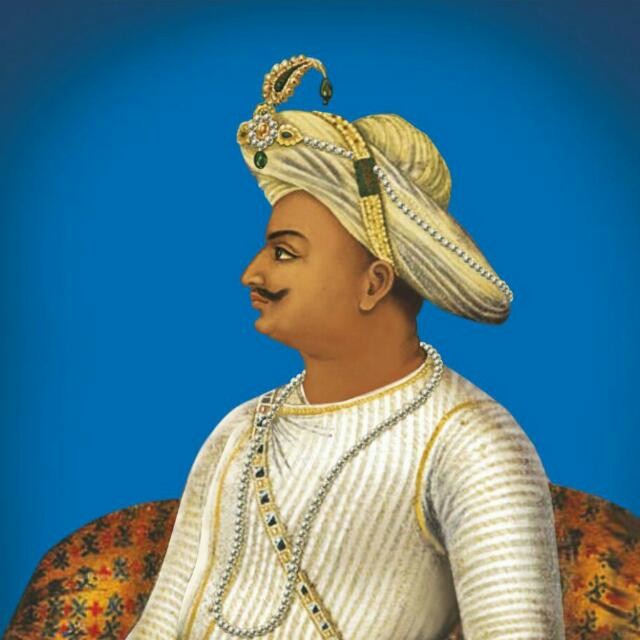
Tipu Sultan and Hindu Temples: What Records and Traditions from Karnataka Reveal
Summary
Tipu Sultan is often portrayed in modern political debates as uniformly anti-Hindu. However, the historical record is more layered. Multiple temples and religious institutions in Karnataka preserve traditions, temple records, and correspondence that indicate Tipu’s patronage, donations, and support-especially notable in cases like the Sringeri Mutt, which sought his help after a Maratha attack. This does not erase controversies around his rule, but it shows why a single, one-dimensional label doesn’t fit.
Background: War, Rivalries, and the Sringeri Crisis
In 1789, the British allied with the Marathas and the Hyderabad Nizam to weaken Tipu Sultan of Mysore, who strongly resisted the East India Company’s expansion. The Marathas and Mysore had a long history of hostility, predating this alliance. Hyder Ali (Tipu’s father) first gained prominence by taking the fort of Devanhalli from the Marathas in a hard-fought battle.
In 1791, Maratha forces under Raghunath Rao Patwardhan invaded the Mysore region and attacked the Sringeri Mutt, a prominent institution founded about a thousand years earlier by Adi Shankaracharya, central to Advaita Vedanta.
Attacks on temples during warfare were not unheard of in pre-modern India (for example, the Maratha attack on Tirupati in 1759 is less discussed today). But Sringeri carried exceptional prestige and wealth, making it a notable target.
1) Sharadamba Temple and Sringeri Mutt (Sringeri)
The Sringeri Mutt had historically received patronage from many rulers-both Hindu and Muslim. Tipu continued this tradition. Records describe that he sent valuable gifts and granted tax-free land. In correspondence, Tipu is said to have addressed the head of the Mutt with reverence (e.g., “Jagadguru”).
After the Maratha attack, the head of the Mutt wrote to Tipu requesting help to reconsecrate the desecrated idol of Goddess Sharada. Tipu responded with anger at the desecration and made arrangements to support the reconsecration, also sending gifts for the deity.
Importantly, the Sringeri institution is known to have preserved this correspondence in its archives, which is often cited as evidence of Tipu’s relationship with the Mutt.
2) Mookambika Temple (Kollur)
The Kollur Sri Mookambika Temple, located in the communally sensitive Dakshina Kannada region, is associated with an oral tradition called “Salam Mangalaharathi”-a special puja performed daily in Tipu Sultan’s name, said to commemorate his visit.
This practice is described as an oral, undocumented tradition continued by the temple.
Additionally, tradition holds that Tipu offered a bell to the Shankaranarayana Temple (about 10 km from Mookambika).
3) Nanjangud Srikanteswara Temple (Near Mysuru)
Nanjangud houses the large Srikanteswara Temple, associated with a notable donation attributed to Tipu Sultan: an emerald Shiva linga.
According to temple literature, Tipu’s pet elephant was believed to have regained its eyesight after performing a ritual at the temple. In response to the “miracle,” Tipu is said to have honored the deity as “Hakim Nanjunda” and donated the emerald linga.
4) Sri Ranganatha Temple (Srirangapatnam / Mysuru Region)
Under Hyder Ali and Tipu Sultan, Srirangapatnam became the de facto-and later de jure-capital of Mysore, flourishing during this period.
Temple records are cited as stating that Tipu Sultan donated silver vessels to the Sri Ranganatha Swamy Temple and that he also performed certain rituals/poojas there.
Wider Context: Patronage vs. Politics
Beyond these examples, many accounts claim Tipu supported a large number of temples during his reign and that certain local religious traditions and temple records continue to associate him with protection and patronage.
At the same time, Tipu Sultan remains a controversial figure and interpretations vary by source, region, and historian. What these temple-linked records and traditions show clearly is that the reality is not reducible to a single political label.
Conclusion
Tipu Sultan’s legacy is contested because it sits at the intersection of war, empire, religion, and modern identity politics. The evidence preserved in places like Sringeri, and the continuing traditions in temples such as Kollur, Nanjangud, and Srirangapatnam suggest that Tipu’s relationship with Hindu institutions included patronage, donations, and support—even while other aspects of his rule remain debated. A serious reading of history requires holding these complexities together instead of using the past as a weapon for the present.
FAQs
1) Was Tipu Sultan anti-Hindu?
Tipu Sultan’s image is heavily debated. While modern narratives often simplify him as anti-Hindu, several temple records and traditions in Karnataka indicate he supported and patronized some Hindu religious institutions. The historical record is complex and varies by region and source.
2) What is the evidence linking Tipu Sultan to the Sringeri Mutt?
Accounts describe preserved correspondence in which the Sringeri Mutt sought Tipu’s help after a Maratha attack. Tipu is said to have supported the reconsecration of the Sharadamba idol and sent gifts.
3) Why is the Maratha attack on Sringeri important in this debate?
Because it highlights a case where Maratha forces attacked a prominent Hindu institution, and Tipu-often portrayed as anti-Hindu-was approached for help and is said to have responded with support. It complicates “good vs bad” political storytelling.
4) What is “Salam Mangalaharathi” at Kollur Mookambika Temple?
It is described as a special daily ritual performed in Tipu Sultan’s name, remembered as an oral tradition connected to his visit. The tradition is often mentioned as being undocumented but continuously practiced.
5) What did Tipu Sultan donate to Nanjangud Srikanteswara Temple?
Temple tradition and literature attribute an emerald Shiva linga donation to Tipu Sultan, linked to a story about his elephant’s eyesight being restored after a ritual.
6) Did Tipu Sultan patronize the Sri Ranganatha Temple at Srirangapatnam?
Temple records are cited as indicating Tipu donated silver vessels and performed certain rituals/poojas at the temple.
7) Why is Tipu Sultan’s image different today compared to older popular portrayals?
Public memory changes with politics, textbooks, media, and cultural storytelling. Tipu has been portrayed as a freedom fighter in many accounts, while newer political narratives emphasize religious conflict. Both selective readings can distort the fuller history.
Must Read : Vallarpadam Church – The Basillica of Our Lady of Ransom
Must Read : Santhome Basilica, Chennai – Historically significant Church by the Shore
Editorial Review Note
Religion World provides information on all religions and presents it impartially. You can send us information, news, updates, opinions, and suggestions at religionworldin@gmail.com. You can also follow us on X (Twitter), Facebook, and YouTube.
Leave a Reply