Nicolás Maduro & Sathya Sai Baba: Faith Beyond Borders
Faith often transcends geography, language, and political systems. One such remarkable example is the spiritual connection between Nicolás Maduro, the President of Venezuela, and Sathya Sai Baba, one of India’s most influential spiritual leaders. Their association highlights how spirituality can move beyond national borders and influence individuals in positions of global power. The relationship between Maduro and Sathya Sai Baba reflects a broader narrative of faith shaping personal belief systems even within the world of politics.
Who Was Sathya Sai Baba?
Sathya Sai Baba was born in 1926 in Puttaparthi, a small village in Andhra Pradesh, India. He emerged as a spiritual teacher at a young age and went on to inspire millions worldwide. His teachings centered on universal human values—truth, righteousness, peace, love, and non-violence. Rather than promoting a single religion, Sathya Sai Baba emphasized the unity of all faiths and encouraged people to become better followers of their own spiritual traditions.
He was also known for large-scale humanitarian initiatives, including free hospitals, educational institutions, and drinking water projects. These efforts earned him respect not only among spiritual seekers but also among policymakers and global leaders.
Nicolás Maduro’s Spiritual Journey
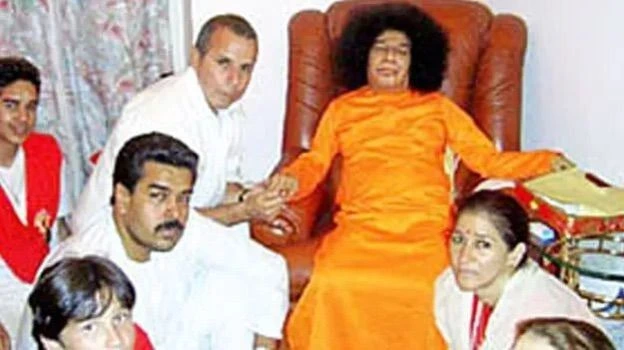
Nicolás Maduro’s connection to Sathya Sai Baba is often traced through his wife, Cilia Flores, who was a long-time devotee of the Indian spiritual leader. Through her influence, Maduro became familiar with Sathya Sai Baba’s teachings and philosophy. Reports indicate that Maduro and Flores traveled to India in the mid-2000s to visit Puttaparthi and seek Sathya Sai Baba’s blessings.
This spiritual exposure reportedly left a deep impression on Maduro. Sathya Sai Baba’s portrait was later seen displayed in Maduro’s private office, symbolizing reverence and personal faith. While Maduro is primarily known as a political leader, this association revealed a lesser-known spiritual dimension of his life.
Faith Beyond Politics
The connection between Nicolás Maduro and Sathya Sai Baba is significant because it challenges common assumptions about politics and spirituality being separate domains. Sathya Sai Baba never promoted political ideology, yet his message of service, discipline, and moral responsibility resonated with leaders across different systems of governance.
For Maduro, Sathya Sai Baba’s teachings on self-control, service to society, and inner discipline reportedly offered spiritual grounding amid the pressures of political leadership. This illustrates how spiritual beliefs can coexist with political authority without necessarily shaping policy in overt ways.
Sathya Sai Baba’s Global Influence
Nicolás Maduro was not the only prominent figure influenced by Sathya Sai Baba. His devotees included individuals from diverse fields—sports, business, arts, and governance. What made Sathya Sai Baba unique was his ability to connect with people across cultures without imposing religious boundaries.
Sai Baba’s global organization operates in more than 160 countries, promoting volunteer service, ethical education, and interfaith harmony. This international presence helped spread his teachings far beyond India, reaching Latin America, Europe, Africa, and the United States.
Spiritual Diplomacy and Soft Power
The association between a Latin American president and an Indian spiritual leader can also be viewed through the lens of spiritual diplomacy. While not formal or state-driven, such connections reflect the soft power of spiritual movements in shaping perceptions and relationships across borders.
Sathya Sai Baba’s emphasis on universal values made his message accessible to people regardless of political ideology. For leaders like Nicolás Maduro, this form of spirituality offered personal guidance rather than political direction, reinforcing the idea that faith can function independently of governance.
After Sathya Sai Baba’s Passing
Sathya Sai Baba passed away in 2011, and his death was mourned globally. In Venezuela, Nicolás Maduro reportedly supported a formal condolence resolution, reflecting the respect held for the spiritual leader. This gesture underscored the depth of the spiritual bond and highlighted how Sathya Sai Baba’s influence extended into state-level acknowledgment.
Even after his passing, Sathya Sai Baba’s teachings continue to guide millions through ongoing service projects, educational institutions, and spiritual programs worldwide.
Why This Connection Still Matters
In a world often divided by politics, ideology, and conflict, the connection between Nicolás Maduro and Sathya Sai Baba serves as a reminder that faith can transcend borders. It shows how spiritual ideas originating in a small Indian village can reach the corridors of power in a distant continent.
This relationship does not define Maduro’s political legacy, nor does it alter Sathya Sai Baba’s spiritual mission. Instead, it illustrates the universal reach of spiritual teachings and their ability to influence individuals from vastly different backgrounds.
The story of Nicolás Maduro and Sathya Sai Baba is not merely about a political leader following a spiritual guru. It is about the global movement of ideas, values, and faith. Sathya Sai Baba’s message of love and service crossed oceans and cultures, finding resonance even in Latin American leadership. Their connection stands as a powerful example of spirituality’s ability to unite humanity beyond borders, politics, and power.
~Religion World Bureau