
Introduction
In today’s fast-paced and competitive world, education is often measured by grades, degrees, and career outcomes. Schools focus heavily on academic achievement, technical skills, and exam performance. While these elements are important, they are not sufficient on their own. A growing concern across societies is the decline in ethical behavior, empathy, respect, and social responsibility among young people. This raises an important question: Is moral education necessary in schools? The answer is a clear and thoughtful yes. Moral education is essential for shaping responsible individuals and building a healthy society.
Understanding Moral Education
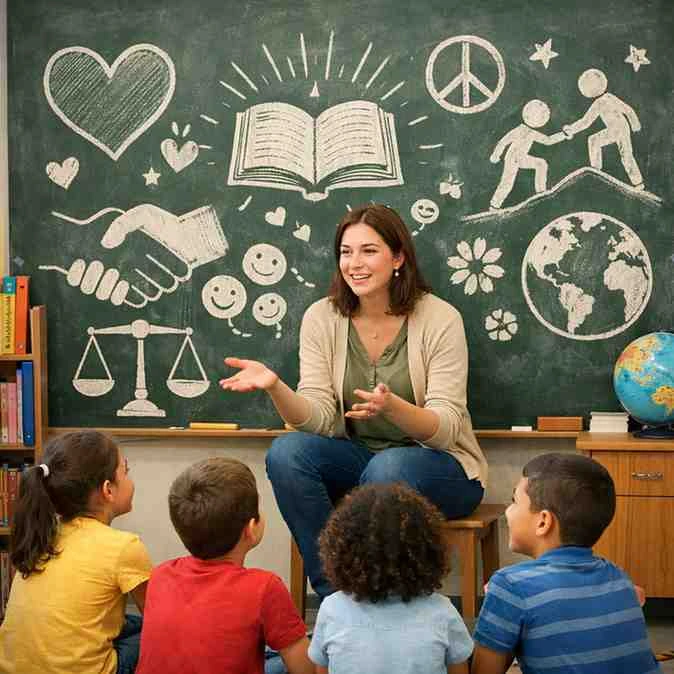
Moral education refers to teaching values such as honesty, compassion, respect, responsibility, self-discipline, and fairness. It helps students understand the difference between right and wrong and encourages them to act ethically in daily life. Moral education is not about promoting any particular religion but about nurturing universal human values that are accepted across cultures and societies.
Role of Schools in Character Building
Schools are not only centers of academic learning but also places where children spend a significant part of their formative years. During this time, students develop habits, attitudes, and behavioral patterns that often stay with them for life. While families play a crucial role in moral development, not all children grow up in the same environment. Schools provide a common platform where values such as respect for diversity, cooperation, discipline, and social responsibility can be taught in a structured and consistent way.
Moral Education and Academic Learning
Academic excellence without moral grounding can be dangerous. Knowledge gives power, but morality gives direction. History has shown that highly educated individuals without ethical values can misuse their knowledge for personal gain, leading to corruption, exploitation, and injustice. Moral education ensures that students use their skills and intelligence for positive and constructive purposes, benefiting both themselves and society.
Developing Emotional and Social Skills
Moral education helps students develop emotional intelligence and social awareness. It teaches empathy, patience, conflict resolution, and respect for others’ feelings and opinions. In schools where moral education is emphasized, students are more likely to show kindness, teamwork, and tolerance. This creates a positive learning environment and reduces issues such as bullying, aggression, and discrimination.
Relevance in the Modern World
In the age of social media, digital competition, and instant gratification, children are exposed to various influences that can confuse their sense of right and wrong. Moral education acts as a guiding force, helping students critically evaluate their actions and choices. It teaches accountability and encourages students to think beyond personal success, considering the impact of their actions on others and on society as a whole.
Preparing Responsible Citizens
One of the primary goals of education is to prepare students to become responsible citizens. Moral education instills respect for laws, democratic values, and social harmony. Students who receive moral education are more likely to contribute positively to their communities, respect cultural differences, and work towards social justice and equality.
Integrating Moral Education in Schools
Moral education does not need to be limited to a separate subject. It can be integrated into daily school life through stories, discussions, group activities, role-playing, and real-life examples. Teachers play a key role by acting as role models, demonstrating ethical behavior through their actions. School culture, rules, and interactions should reflect the moral values being taught.
Conclusion
Moral education is not an optional addition to the school curriculum; it is a fundamental necessity. Education that focuses only on intellectual growth creates skilled individuals, but education combined with moral values creates wise and compassionate human beings. Schools must recognize their responsibility in shaping not just successful professionals but also ethical, empathetic, and socially responsible citizens. By integrating moral education into the schooling system, we invest in a future that is not only educated but also humane and just.
~Religion World Bureau